
Families With Grace

Helping Christian moms create homes filled with grace, love & faith

16 Encouraging Bible verses for overwhelmed moms

Scriptures to uplift the overwhelmed mom

Some days, motherhood just feels like a lot. Too many needs, too many thoughts running through our heads and not enough quiet to catch our breath.

Even Christian moms can be struggling moms. We love our kids deeply, yet still feel overwhelmed.

The good news is that God’s Word can uplift us when our own strength is running low. Take a deep breath and slow down as you reflect on these Bible verses for overwhelmed moms.

The truth is, feeling overwhelmed doesn’t mean you’re a bad mom or that your faith isn’t strong enough. It usually means you’re doing your best in a season that feels heavy.

Motherhood has a way of piling things on all at once — the mental load, the worry, the pressure to do it all well — and sometimes it just catches up with us.

Bible verses for overwhelmed moms Pinterest image 1

These Bible verses are for overwhelmed moms who are tired, stretched thin and wondering how to keep going on hard days. They aren’t meant to add one more thing to your to-do list or make you feel like you need to fix yourself.

Instead, let these verses bring you the peace of God as you connect with your Heavenly Father, who sees all the hard work you do each day. God is right here with you, even in the middle of the chaos.

Bible verses for overwhelmed moms who feel exhausted and worn down

If you’re an overwhelmed mom, chances are you’re also an exhausted mom. You’re the kind of tired that sleep doesn’t fix. 

The kind of tired that settles into your bones after too many long days, too many challenging moments and too much responsibility resting on your shoulders. These are the days when motherhood feels especially heavy and you wonder how much longer you can keep going.

The Word of God doesn’t overlook those weary seasons. In fact, Scripture speaks directly to struggling moms, reminding us that God sees our hard work and meets us in hard times.

“Come to me, all you who are weary and burdened, and I will give you rest. Take my yoke upon you and learn from me, for I am gentle and humble in heart, and you will find rest for your souls. For my yoke is easy and my burden is light.”

Matthew 11:28–30 (NIV)

When motherhood feels overwhelming, Jesus doesn’t tell us to push harder or try to do more. He invites us to come to Him just as we are — weary, worn down and in need of rest.

No matter where you are in your motherhood journey, you need the rest that comes only from leaning into Christ Jesus. Whether you’re navigating sleepless nights with a newborn, a quiet house after your child moves out or somewhere in between, Jesus understands the weary mom and is right there to give us His perfect peace.

“He gives strength to the weary and increases the power of the weak. Even youths grow tired and weary, and young men stumble and fall; but those who hope in the Lord will renew their strength. They will soar on wings like eagles; they will run and not grow weary, they will walk and not be faint.”

Isaiah 40:29–31 (NIV)

Some seasons of motherhood leave us running on empty. This verse is a reminder that when our own strength is gone, God supplies what we lack, every step of the way. 

This is one of my favorite Bible verses because it reminds me that we all struggle no matter our ages or stages of life. And God sees that struggle and gives us strength for each season of life.

“Let us not become weary in doing good, for at the proper time we will reap a harvest if we do not give up.”

Galatians 6:9 (NIV)

On hard days, it can feel like all your effort goes unnoticed. God’s Word reminds us that the daily work of motherhood matters, even when it feels unseen or unappreciated.

Because, let’s face it, on tough days, we can feel like we are working hard for little to no reward. But this verse encourages us that our good work truly does matter and make a difference.

“Therefore we do not lose heart. Though outwardly we are wasting away, yet inwardly we are being renewed day by day. For our light and momentary troubles are achieving for us an eternal glory that far outweighs them all. So we fix our eyes not on what is seen, but on what is unseen, since what is seen is temporary, but what is unseen is eternal.”

2 Corinthians 4:16–18 (NIV)

Even in the trenches of motherhood, God is still at work. Exhaustion doesn’t mean nothing is happening. It means God is renewing us in ways we may not see yet.

We may be up to our elbows in dirty diapers and wondering when God’s renewal is coming. Or we may be practically living in our cars as we chauffeur children from one activity to the next and struggle to see the power of Christ at work.

Yet, these verses assure us that God is always working, renewing and strengthening in ways we can’t see. We can trust that God is with us even in difficult times.

Bible verses for overwhelmed moms who feel anxious and worried

When you’re overwhelmed, anxiety often isn’t far behind. Your mind won’t slow down, worries stack up and fear can sneak in when you least expect it.

Motherhood has a way of amplifying anxious thoughts, especially when you care so deeply and feel responsible for so much.

God’s Word speaks directly to anxious hearts. The following Bible verses remind overwhelmed moms that God offers real peace — not a shallow calm, but the kind of peace that steadies us even when our thoughts feel loud and out of control.

“Do not be anxious about anything, but in every situation, by prayer and petition, with thanksgiving, present your requests to God. And the peace of God, which transcends all understanding, will guard your hearts and your minds in Christ Jesus.”

Philippians 4:6–7 (NIV)

As an anxious mom myself, I’ve always been a bit challenged by this verse. When I think of it on my own, then I’m overwhelmed by the command to not be anxious about anything. 

On my own that is pretty impossible. My own understanding of life and anxiety tell me I can’t live this way.

But the God of hope tells me differently. When I focus on who God is and His peace, then my anxiety does fall away. It’s less about trying on our own to not be anxious and much more about leaning on our everlasting God who holds everything in His hand.

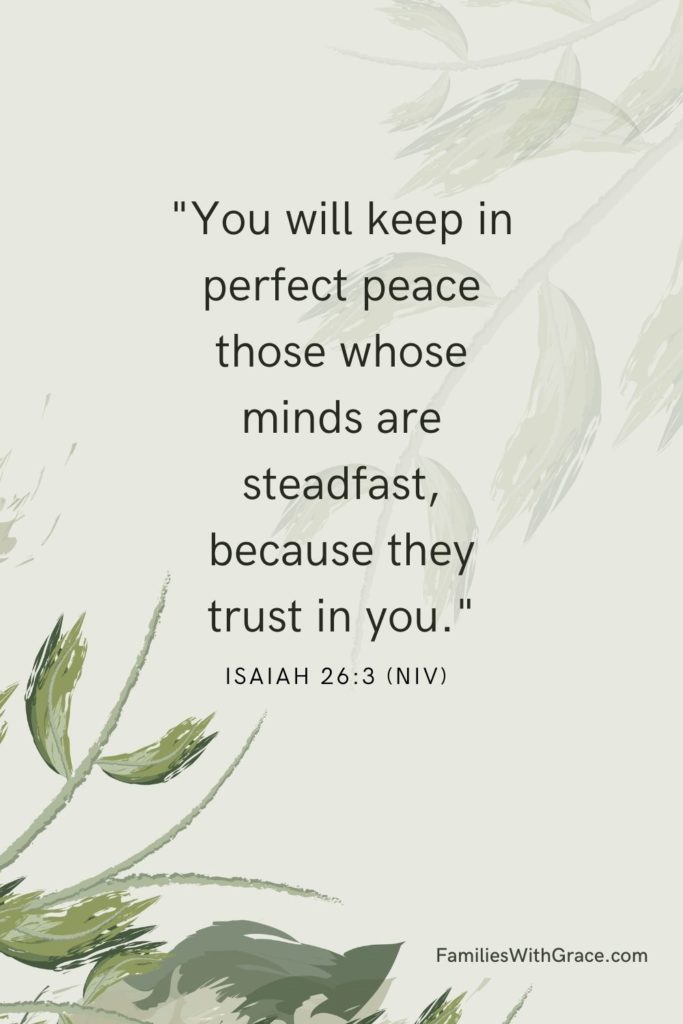
“You will keep in perfect peace those whose minds are steadfast, because they trust in you.”

Isaiah 26:3 (NIV)

Having a steadfast mind is the best way to have God’s peace. In real, busy mom life that looks like finding little ways throughout the day to pause and remember God is with you every step of the way.

This might look like taking a moment to pray while you’re driving to school pick-up. Or it might look like taking time to sing along with worship music as you make snacks. 

Finding practical ways to connect with God and embrace Him throughout the day can help you find God’s peace in the chaos. 

“For God gave us a spirit not of fear but of power and love and self-control.”

2 Timothy 1:7 (ESV)

The NIV translation says the Spirit of God doesn’t make us timid. But, I relate a bit more to the ESV translation here. 

I struggle with fear. Since becoming a mom, I’ve learned about a new spirit of fear that can nearly paralyze me. 

But I’ve also learned about the power of the Holy Spirit to calm my fears. Sometimes taking time to really think about the unconditional love of God can help allay my fears. 

After all, fear doesn’t get the last word — God does.

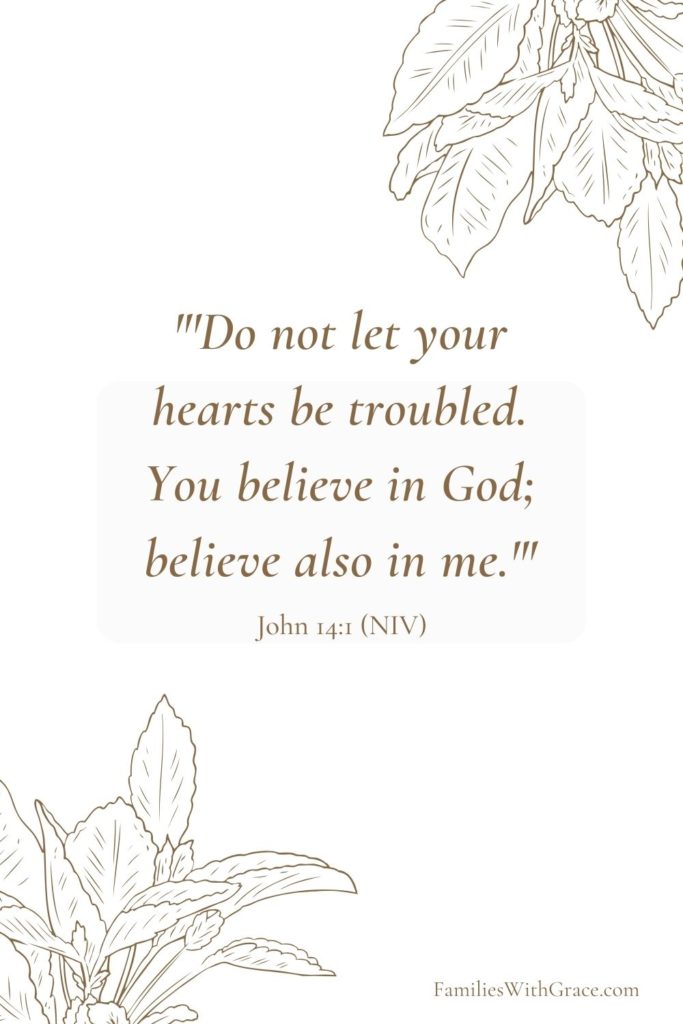
“Peace I leave with you; my peace I give you. I do not give to you as the world gives. Do not let your hearts be troubled and do not be afraid.”

John 14:27 (NIV)

When we trust God, we are able to be filled with His peace. And His peace isn’t impacted by circumstances. Even in the hard and overwhelming seasons of motherhood, we can have peace in God.

This verse can become a great prayer: “Dear God, give me your peace that is not like what the world gives. Help me to release my worries to you so that my heart isn’t troubled and I’m not afraid. Amen.”

Bible verses for overwhelmed moms who need comfort and reassurance

There are moments in motherhood when what we need most isn’t advice or answers, but comfort. When emotions feel heavy and tears come easily, it helps to be reminded that God sees us, knows our hearts and draws near in our pain.

These Bible verses are for overwhelmed moms who need reassurance that they are deeply loved and not alone. God’s comfort meets us in our weakest moments and gently reminds us that His compassion never runs out.

“Praise be to the God and Father of our Lord Jesus Christ, the Father of compassion and the God of all comfort, who comforts us in all our troubles, so that we can comfort those in any trouble with the comfort we ourselves receive from God.”

2 Corinthians 1:3–4 (NIV)

I do my best to be a good mom to my children. Yet, God is the best Father to us. He sees our fears and stresses. His heart aches with ours, even when He sees the big picture of how everything is going to work out and how we are growing in our faith along the journey.

And just like we mamas do for our children, so God also shows us compassion and comfort. He comforts us in our temper tantrums and on our hardest days. 

“As a mother comforts her child, so will I comfort you; and you will be comforted over Jerusalem.”

Isaiah 66:13 (NIV)

Not much in human experience compares to a mother’s love. It can be a force of nature to be reckoned with, in fact.

So it’s not all that surprising that God promises to comfort us as a mother comforts her child. When our children are upset, we want to do whatever we can to comfort and help them. 

Somehow God’s love for us is even greater than that!

“The Lord is close to the brokenhearted and saves those who are crushed in spirit.”

Psalm 34:18 (NIV)

When we are going through some of the darkest moments of life what we need most is someone to just sit with us in our heartache. God does just that.

During the times we are broken and downtrodden, He draws closer to us and brings His peace and comfort in ways we may not even see until looking back later.

Hard feelings and broken hearts don’t scare God away. In fact, they make Him draw closer.

“The Lord your God is with you, the Mighty Warrior who saves. He will take great delight in you; in his love he will no longer rebuke you, but will rejoice over you with singing.”

Zephaniah 3:17 (NIV)

I think this is one of the best Bible verses for overwhelmed moms. It isn’t one we come across a lot. 

But the imagery of God as a strong and mighty warrior who is fierce and also full of love is powerful. Many times we can fall into a pattern of thinking of God as a harsh and authoritative father.

Yet He is a loving, good Father who rejoices over us any time we seek Him. He is waiting to love and comfort us, not simply rebuke us.

Bible verses for overwhelmed moms who need to remember God is with them

Overwhelm can make motherhood feel isolating, as if you’re carrying everything on your own. In long or difficult seasons, it’s easy to forget that God is present in the everyday moments, even when life feels chaotic or uncertain.

These Bible verses remind overwhelmed moms that God is always with them — strengthening, guiding and walking beside them through every season of motherhood. No matter where you are right now, you are never alone.

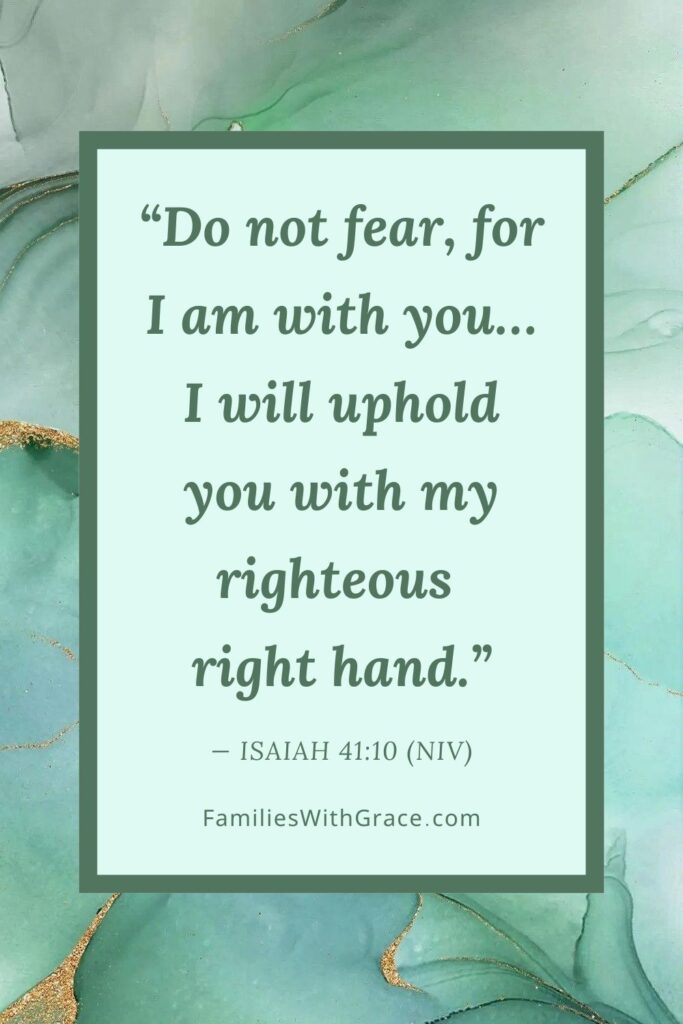
“So do not fear, for I am with you; do not be dismayed, for I am your God. I will strengthen you and help you; I will uphold you with my righteous right hand.”

Isaiah 41:10 (NIV)

This verse has gotten me through so many tough times during my life. Parts of the verse have struck me differently throughout seasons of overwhelm and struggle.

Sometimes I’m most comforted by the reminder that God is with me in my fear. Other times, I’m comforted in knowing that God is with me.

Still other times, I cling to the promise of His strength and help. And on the darkest days, I use the final part of the verse as a breath prayer: “God, uphold me with your righteous right hand.”

Whether you need comfort for fear, reassurance of His strength and help or the reminder that He holds you in His hand, these words from Isaiah can bring you God’s encouragement right where you are.

“Be strong and courageous. Do not be afraid or terrified because of them, for the Lord your God goes with you; he will never leave you nor forsake you.”

Deuteronomy 31:6 (NIV)

There isn’t much greater comfort than knowing that whatever we face, wherever we are headed, God is going with us. He won’t leave us hanging.

Remember the way He took care of you in the past? He’ll do it again. Our Heavenly Father isn’t one to leave us high and dry. 

He goes with us through every moment and every situation.

“God is our refuge and strength, an ever-present help in trouble.”

Psalm 46:1 (NIV)

Not only is God always with us and helping us, He is our safe place to land. When life gets overwhelming, we can take a few moments and just rest in Him. 

God is as close as a whispered prayer. Even a prayer as simple as “God, wrap your arms around me,” can bring peace to your heart in the midst of the hurt.

God is available right now, not just when life calms down.

“And surely I am with you always, to the very end of the age.”

Matthew 28:20b (NIV)

Never for a single moment of your life has God forgotten you. Never has He left your side. 

He is with us in every moment and every season of life — and motherhood — even when we wander away. We can trust that God is with us through it all and will continue to be.

You don’t have to walk through overwhelm alone

Feeling overwhelmed doesn’t mean you need more to-do lists. It often means you need more support and connection.

If you’re looking for encouragement from other Christian moms who understand these seasons, you’re always welcome in the free Christian Moms with Grace Facebook community. It’s a place to connect, be encouraged and remember you’re not alone.

And if you’re craving deeper, ongoing support through Bible studies, gentle rhythms and faith-filled conversation, The Grace Circle for Christian Moms membership was created for seasons like this — a quiet, grace-filled space to grow without pressure or perfection.

Wherever you start, you don’t have to do motherhood alone.

Find more free resources of encouragement for overwhelmed moms:

7 Prayers for overwhelmed moms needing peace and strength

To the mom who is overwhelmed

Faith burnout: When your relationship with God feels heavy

Free Bible reading plans for moms

Faith burnout: When your relationship with God feels heavy

Recognizing when spiritual exhaustion has quietly taken over your faith

A couple of months ago, I was struggling. I didn’t want to read my Bible, praying felt like a chore and even listening to my beloved contemporary Christian music was falling flat. It was, quite simply, spiritual burnout.

I wasn’t angry at God or doubting Him. I was just weary, overwhelmed and tired. My spiritual life started feel like it was just adding to my endless to-do list and I couldn’t measure up.

While I think this is something most Christians experience at different times in life, it’s not a topic we are likely to talk about. And I think it’s really a big issue for us mamas. 

Our to-do lists never stop. The mental load of motherhood is taxing. Finding ways to keep all the balls in the air at the same time is just not possible.

Before I go further, I want to start with some reassurances that I need and you may, too:

  • You haven’t lost your faith.
  • Your spiritual journey isn’t derailed.
  • God isn’t upset with you.
  • Your Heavenly Father loves you and understands you.

(If this post resonates, you’re not alone. I created the Simple Faith without Pressure Bible study for moms who feel spiritually tired and overwhelmed. It’s completely free and designed to help you reconnect with God without adding more pressure to your plate.)

What faith burnout actually feels like

Faith burnout can be hard to recognize at first because it creeps in slowly. It’s not usually one dramatic moment. Instead, it’s the gradual shift from “I get to” to “I have to.”

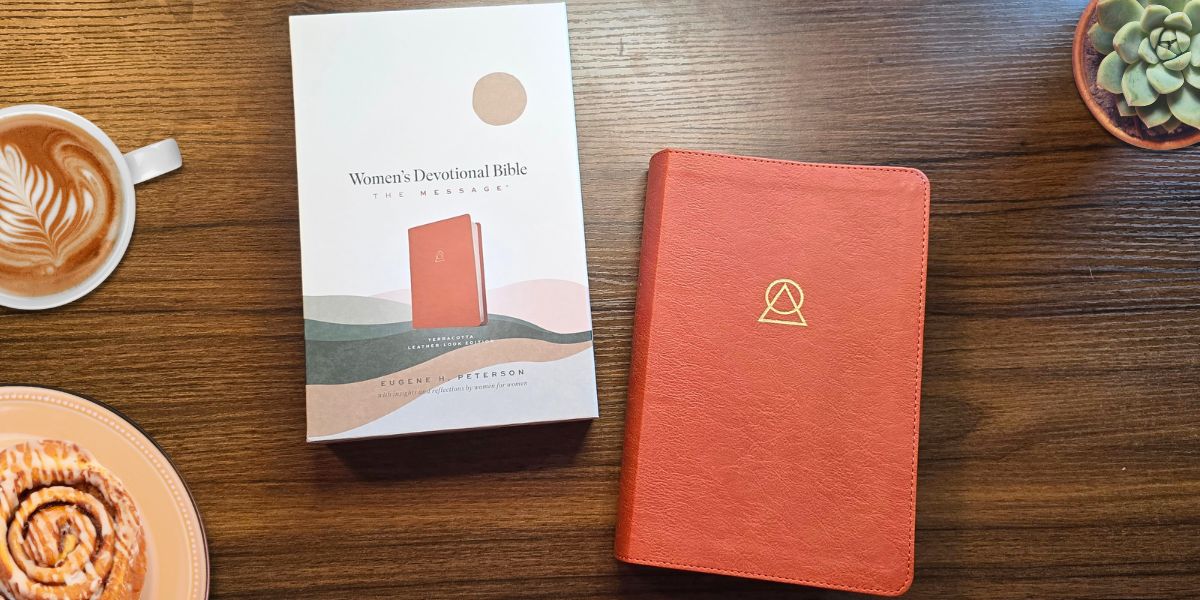
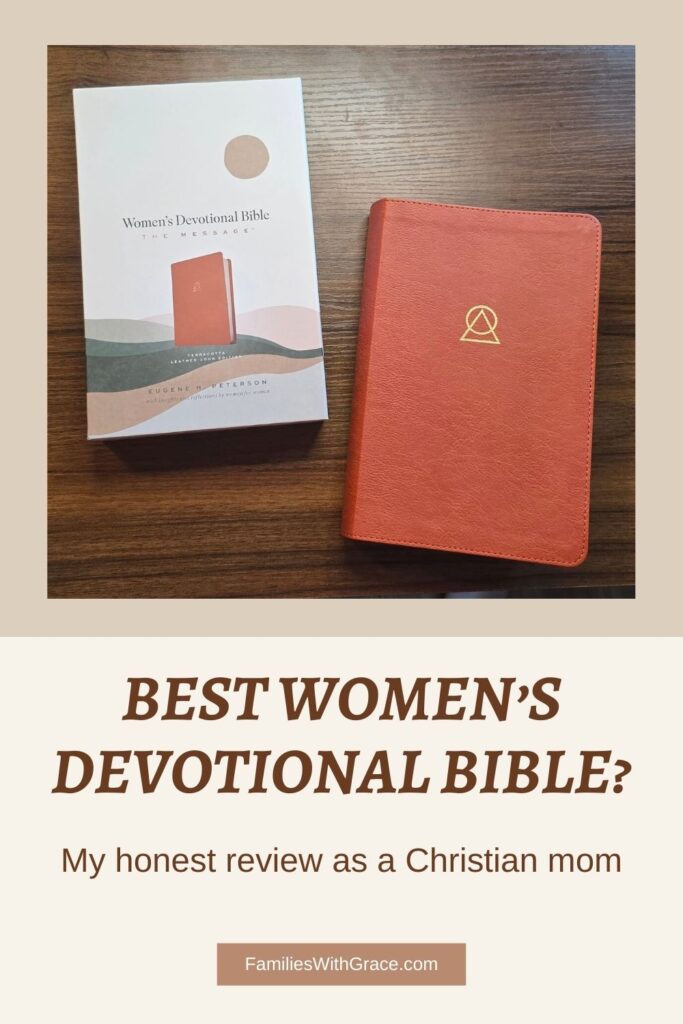
I had been going along just fine with reading my Bible. I had a new women’s devotional Bible I was enjoying, in fact. But slowly, reading my Bible began to feel more like obligation than privilege. I dreaded it more than I looked forward to it.

My prayer time became more routine list of going through the motions rather than actually communicating with God. I even found myself wanting to avoid church activities that I usually loved. 

These are all signs of faith burnout. Other things can include saying yes to additional ministry commitments even though you’re already drowning because saying no feels like giving up on God altogether.

Or you might feel guilty more often than you feel loved by God. Maybe you compare your spiritual practices to someone else’s and always come up short. 

Perhaps rest feels impossible because there’s always something more you “should” be doing for God.

This is spiritual exhaustion, and it’s more common than we talk about. Especially for moms who are already pouring themselves out in a thousand different directions in their daily life.

When striving replaces grace

Here’s what often happens: we start our Christian life understanding grace. We accept that we’re saved by faith, not by our own effort. But then, somewhere along the way, we slip into trying to earn what we already have.

We begin measuring our spiritual health by how busy we are, how much we’re serving and how consistent our quiet time is. We put pressure on ourselves to do spiritual things like reading through the Bible in a year. 

Serving, having quiet time and reading through the Bible are healthy spiritual habits, but when we start putting pressure on ourselves and doing them right, we often get off track.

Spiritual Burnout Pinterest image 1

Galatians 3:3 asks a piercing question that gets right to the heart of this: “Are you so foolish? After beginning by means of the Spirit, are you now trying to finish by means of the flesh?”

We start with grace, but we end up in striving. We accept God’s love as a gift, but then we spend our days trying to prove we deserve it through our own actions.

And that’s exhausting. This state of exhaustion didn’t happen overnight, and it won’t resolve overnight either.

The pressure of performance-based faith

Social media hasn’t helped. We see beautiful Bible journaling spreads and perfectly organized prayer journals. Or we watch someone’s morning routine—complete with an hour of worship and homemade bread—and wonder what’s wrong with us for struggling to read one chapter while our toddler pours milk on the dog.

But comparison is always based on incomplete information. You’re comparing your full reality with someone else’s highlight reel. 

You’re measuring your messy kitchen and forgotten prayers against a carefully curated image that doesn’t tell the whole story.

The truth is, God isn’t asking you to be that other mom. He’s not comparing your faith to hers. He sees you in your unique season, with your specific circumstances and challenges, and He’s inviting you to be faithful right where you are in your own life.

Not perfect. Just faithful. And there’s a world of difference between the two.

What God is actually asking for

This is where Jesus’ words in John 6:28-29 become so important. The people asked Him, “What must we do to do the works God requires?” 

And Jesus answered, “The work of God is this: to believe in the One He has sent.”

Believe. That’s it. Not achieve, not perform, not prove yourself. Just believe.

Your Christian faith isn’t primarily about what you do for God. It’s about trusting what He’s already done for us. It’s relationship, not accomplishments.

When we make faith about performance, we turn it into something it was never meant to be. We create our own spiritual exhaustion by trying to earn love that’s already freely given. 

In the end, we do the wrong thing with good intentions by adding more spiritual disciplines when what we really need is rest in God’s grace.

Good things can still be exhausting

Here’s something that makes spiritual burnout especially tricky: we’re often exhausted by good things. Bible reading is good. Prayer is good. Serving at church is good. Small group participation is good.

But even good things, when piled on top of an already full life, can lead to emotional exhaustion and feelings of exhaustion that seep into our whole life.

The problem isn’t the spiritual practices themselves. The problem is when they become obligations we perform to prove ourselves rather than ways we connect with the God who loves us.

At the end of the day, it’s not about doing more good things. It’s about making sure the right thing has first place in our hearts: relationship with God, not religious performance.

The difference between rest and laziness

I know what you might be thinking: “But doesn’t God want me to grow? Doesn’t He call me to serve? Isn’t there more to faith than just believing?”

Yes. Growth is real. Service matters. But here’s the crucial difference: when we’re rooted in God’s grace, growth and service flow naturally from love, not from fear of not being enough.

We don’t serve to earn God’s approval. We serve because we’ve already received it.

We don’t read God’s Word to check a box. We read it because we want to know the God who loves us.

We don’t pray to prove we’re spiritual. We pray because we’re talking to Someone who actually cares about our day, our struggles and our hearts.

When faith comes from a place of rest rather than striving, it stops feeling heavy. Not because the circumstances change, but because we’re no longer carrying the weight of trying to make ourselves acceptable to God through our own efforts.

This is the good news: you don’t have to earn what you already have.

Rest doesn’t mean standing still

One thing I want to be really clear about: choosing rest and releasing pressure doesn’t mean we stop pursuing God altogether.

Faith isn’t passive. It’s living and growing. We do keep moving forward, but not through guilt, fear or sheer willpower. 

Rest isn’t the opposite of faithfulness. It’s often what allows faithfulness to last.

Sometimes burnout convinces us that the only options are pushing harder or giving up. But there’s a third way: continuing to seek God in smaller, more honest, more sustainable ways. 

A whispered prayer still matters. A single verse still feeds our souls. Showing up imperfectly still counts.

Grace doesn’t invite us to disengage from God. Instead it invites us to stay connected without the pressure to perform.

(If you’d like encouragement and honest conversation around this, you’re welcome to join my free Facebook group, Christian Moms with Grace. It’s a supportive space for moms to talk about faith, family and real life without judgment or pressure.)

Small shifts that make room for grace

If you’re feeling burned out in your spiritual life right now, you don’t need another five-step plan or a more rigorous routine. You need permission to let go of what’s crushing you.

That might look like stepping back from a ministry role that’s draining you dry. It might mean switching from that Bible reading plan that’s making you dread opening Scripture. It could be as simple as having a two-minute honest conversation with God while you’re folding laundry instead of beating yourself up for not having a perfect quiet time.

A few months ago, I was pushing through a difficult book in the Bible, dreading my daily readings. One morning, I felt the Holy Spirit whisper to me to go off plan and read the book of Luke instead. 

The relief I felt when I gave myself permission to do that was immediate. I’d been letting my idea of what Bible reading should look like get in the way of actually connecting with God.

Sometimes the most spiritual thing we can do is admit we’re tired and let God meet us in that honesty. There’s no shame in recognizing you need to adjust your spiritual journey to fit your current season.

Setting healthy boundaries isn’t unspiritual

One of the hardest lessons for many of us—especially when we feel responsible for everyone—is that saying no isn’t the same as lacking faith.

Jesus set boundaries. He withdrew from the crowds to pray. He didn’t heal every person or meet every need. He knew His mission and stayed focused on God’s way rather than everyone’s expectations.

Setting healthy boundaries in your spiritual life isn’t selfish. It’s sustainable. It’s recognizing that you’re not God, and that’s actually good news.

You can’t be at every church activity. You don’t have to lead every Bible study. You’re allowed to skip Sunday morning service occasionally when you’re sick or completely depleted. You can love God deeply without running yourself into the ground.

In fact, last fall, I chose to step back from making dinner for our church youth group once every couple of months because it was overwhelming in that particular season. It wasn’t permanent, and I’ve started serving in that way again. 

But I needed that break and boundary in that season, and it’s OK. God wasn’t made at me. The youth pastor understood. No kids went hungry. We all survived and now I feel more excited for having had a break.

It’s a relatively small thing, yet knowing I could say no when I felt overwhelmed brought me immense relief.

Creating space for rest isn’t giving up. It’s making room for the power of the Holy Spirit to actually work in your life instead of trying to manufacture spiritual fruit through sheer willpower.

The gift you’ve been trying to earn

Here’s the truth that changes everything: you already have what you’ve been exhausting yourself trying to achieve.

You’re already loved. Already accepted. Already enough—not because of what you do, but because of what Christ has done.

God isn’t standing over you with a clipboard, marking down every spiritual failure. He’s not comparing you to other Christians. He sees you through the lens of Jesus’ finished work, and He sees you as beloved.

Faith without pressure means recognizing this truth and letting it sink deep into your heart. It means asking “What is God inviting me into today?” instead of “What do I have to do to be acceptable?”

That shift changes everything. It transforms your spiritual life from a burden into the gift it was always meant to be.

Permission to rest

If you’re burned out right now, please hear this: God is not disappointed in you. He sees your weariness, and He’s inviting you to rest.

Not to do more. To rest.

You’re allowed to have seasons where you can’t do it all. You’re allowed to step back. You’re allowed to admit you’re tired. You’re allowed to let some things go.

God isn’t asking you to run yourself into the ground for Him. He’s asking you to abide in Him, to stay connected, to let His life flow through you instead of trying to manufacture spiritual fruit through sheer willpower.

Sometimes the most faithful thing you can do is take a nap, order pizza for dinner and spend the evening just being present with your family instead of rushing off to another church event. Sometimes the best thing for your soul is simply spending much time in God’s presence without any agenda.

God isn’t asking for your exhaustion. He’s offering His rest.

What matters most

At the end of the day, faith isn’t measured by how much you do or how perfect your spiritual practices look. It’s measured by trust. By showing up honestly. By believing that God loves you even on the days when you don’t feel very spiritual.

Your simple, imperfect, sometimes-struggling faith is enough. Because faith was never about you being enough. It’s about trusting that Jesus is.

The only way forward when you’re burned out isn’t to try harder. It’s to receive grace more fully. It’s to let God carry what you were never meant to carry alone.

So take a deep breath, mama. Let go of the pressure. God meets you right where you are—tired, imperfect, doing your best. And that’s exactly where His grace does its most beautiful work.

(For moms who want deeper support and guided faith rhythms, I also host a small paid Facebook group, The Grace Circle for Moms, that walks through this study together with added encouragement and resources. It’s there for those who want a little more structure and community in this season.)

Find more faith encouragement in these posts:

Faith without pressure: Why grace matters more than works

Loving others without burnout: A guide for busy moms

Encouragement for when you feel like you’re failing God

Lessons from mothers in the Bible

Faith without pressure: Why grace matters more than works

Letting go of hustle, comparison and burnout so your faith can feel life-giving again

A couple of months ago, I was struggling and having a hard time with overwhelm and burnout that made their way into my spiritual walk as well. I was going through a Bible reading plan and dreading the daily readings. I was stuck in a book of woe, and it was just hard to read.

Then one morning, I took a deep breath and realized that isn’t what God intended. Following a Bible reading plan and reading through the Bible in a year was a great goal, but it wasn’t the only way to connect with God.

I felt the Holy Spirit whisper to me to go off plan and read the book of Luke. I switched up my reading, and felt such a great relief. My preconceived idea of what Bible reading should look like in that season was getting in the way of my relationship with my Heavenly Father.

I worried I was disappointing God when all along, He just longed to bless and encourage me.

Maybe you’ve been there, too, and had a sinking feeling that your Christian faith has become just another task on your endless to-do list. Another area where you’re not measuring up. Another source of pressure in a life that already feels like too much.

But what if I told you that’s not what faith was ever meant to be?

What does faith without pressure actually mean?

Faith without pressure means living out your Christian faith from a place of grace and trust, not performance, comparison or constant striving.

Faith without pressure isn’t about lowering standards or caring less about your relationship with God. It’s about understanding what true faith actually looks like according to Scripture—not according to Instagram, not according to the mom at church who seems to have it all together and not according to the voice in your head that says you’re never doing enough.

In Matthew 11:28-30, Jesus says something that should change everything: “Come to me, all you who are weary and burdened, and I will give you rest. Take my yoke upon you and learn from me, for I am gentle and humble in heart, and you will find rest for your souls. For my yoke is easy and my burden is light.”

Read that again. Easy. Light. Rest. That’s God’s plan for our spiritual lives.

The truth is, God never intended for your relationship with Him to feel like a performance review. Faith without pressure means recognizing that you’re already loved, already accepted, already enough not because of what you do, but because of what Christ has done.

When faith starts to feel like hustle

Here’s what pressure-based faith looks like in real life:

You wake up feeling guilty because you didn’t get up early enough for a “proper” quiet time. You compare your prayer life to someone else’s and feel like you’re failing. You say yes to another church commitment even though you’re already drowning. You read Christian books about doing more, being more, achieving more for God.

You measure your spiritual health by how busy you are in ministry. You feel anxious when you rest because you “should” be doing something productive. You secretly wonder if God is disappointed in you. You’re exhausted, but you keep pushing because stopping feels like giving up on faith altogether.

Sound familiar?

This hustle mentality has infiltrated Christian culture so deeply that many of us can’t tell the difference between genuine faithfulness and religious performance anymore. We’ve confused being busy for God with actually knowing God. We’ve mistaken activity for intimacy.

But the pressure of life, including self-imposed spiritual pressure, wasn’t meant to define our walk with Christ. In fact, it often gets in the way.

Galatians 3:3 asks a piercing question: “Are you so foolish? After beginning by means of the Spirit, are you now trying to finish by means of the flesh?”

We start with grace, but then we slip into striving. We begin in freedom, but end up in bondage to our own expectations.

The comparison trap that steals our peace

Social media has made comparison a constant temptation. You see another mom’s beautiful Bible journaling spread and feel inadequate about your scribbled notes.

Faith without pressure Pinterest image 6

You watch someone’s morning routine video—complete with an hour of worship, prayer and Scripture memory while being dressed just so and making bread from scratch—and wonder what’s wrong with you for struggling to read one chapter while your toddler dumps cereal on the floor.

But here’s the thing about comparison: it’s always based on incomplete information. You’re comparing your full reality of the messy kitchen, the forgotten prayers, the days when faith feels hard with someone else’s highlight reel.

Great faith isn’t measured by how much you do or how perfect your spiritual practices look. In Luke 18:9-14, Jesus told a parable about two men praying. The Pharisee stood and prayed about himself, listing all his spiritual accomplishments. The tax collector simply beat his breast and said, “God, have mercy on me, a sinner.” Jesus said it was the tax collector who went home justified before God.

The one who came with nothing but honest need. The one who wasn’t performing. The one who simply trusted in God’s mercy.

That’s what God is looking for: trust. Not performance.

Comparison also distorts our understanding of what God is actually asking of us. Your calling, your season and your circumstances are uniquely yours.

God isn’t asking you to be that other mom. He’s inviting you to be faithful right where you are, with what you have, in this moment.

We are all different with different personalities, skillsets and passions. Outside pressure to be like someone else just doesn’t fit.

Understanding true faith vs. works-based faith

This is where things get really important. We need to talk about the difference between true faith and faith that’s actually just works dressed up in spiritual language.

Ephesians 2:8-9 makes it crystal clear: “For it is by grace you have been saved, through faith—and this is not from yourselves, it is the gift of God—not by works, so that no one can boast.”

We can’t earn our way into God’s love. We can’t pray enough, serve enough or be good enough to make God love us more. He already loves us completely. That’s grace.

But many of us still operate as if we have to prove ourselves. We’ve intellectually accepted grace, but we’re emotionally still stuck in a works-based mindset. We think if we just do more good works, we’ll finally feel secure in God’s love. If we just try harder, we’ll finally feel like we’re good Christians.

That’s exhausting. And it’s not what God’s word teaches.

True faith is trusting God even when we don’t understand. It’s believing His promises when circumstances look impossible. It’s resting in His grace instead of striving for His approval. It’s showing up honestly with our doubts, our struggles and our real selves instead of pretending to have it all together.
Romans 5:1-2 reminds us that “since we have been justified through faith, we have peace with God through our Lord Jesus Christ, through whom we have gained access by faith into this grace in which we now stand.”

Peace. Access. Grace in which we stand, not grace we’re scrambling to reach.

How grace replaces the pressure to perform

Grace is the game-changer. It’s what transforms Christian faith from a burden into a gift.

When you truly grasp grace, you realize God isn’t standing over you with a clipboard, marking down every spiritual failure. He’s not disappointed when you’re too tired for daily prayer.

He’s not comparing you to other Christians. He sees you through the lens of Christ’s finished work on the cross, and He sees you as beloved.

This is where the Holy Spirit becomes so important. The Holy Spirit isn’t some divine taskmaster pushing you to do more.

The Spirit is God’s presence with you, empowering you, comforting you and guiding you through love, not guilt.

When you live in grace, you stop asking, “What do I have to do to be acceptable to God?” and start asking, “What is God inviting me into today?” That shift changes everything.

Grace doesn’t make us lazy. Actually, the opposite happens. When we stop exhausting ourselves trying to earn love we already have, we discover the energy and freedom to love others genuinely.

We serve from overflow instead of obligation. We find deeper trust developing naturally as we spend time with God because we want to, not because we have to.

Titus 3:4-5 beautifully captures this: “But when the kindness and love of God our Savior appeared, he saved us, not because of righteous things we had done, but because of his mercy.”

Not because of what we did. Because of His mercy.

Recognizing and healing from faith burnout

Faith burnout is real, and it’s more common than you might think. It happens when the pressures of life combine with unrealistic spiritual expectations to create a perfect storm of exhaustion.

You might be experiencing faith burnout if:

  • Reading your Bible feels like a chore instead of a delight
  • Prayer feels obligatory rather than conversational
  • You feel guilty more often than you feel loved by God
  • Church attendance drains you instead of refueling you
  • You’re going through the motions but feeling spiritually numb
  • You secretly wonder if you’re cut out for this faith thing at all

If that’s you, please hear this: God is not disappointed in you. He sees your weariness, and He’s inviting you to rest.

In Mark 6:31, Jesus told His disciples, “Come with me by yourselves to a quiet place and get some rest.”

This was after they’d been busy serving and ministering. Jesus didn’t say, “Push through! Do more!” He invited them to rest.

You’re allowed to rest. You’re allowed to have seasons where you can’t do it all. You’re allowed to step back from commitments. You’re allowed to admit you’re tired.

God isn’t asking you to run yourself into the ground for Him. He’s asking you to abide in Him (John 15:4). Abiding isn’t hustle; it’s presence and staying connected. It’s letting His life flow through you instead of trying to manufacture spiritual fruit through sheer willpower.

Hebrews 4:9-10 offers this beautiful promise: “There remains, then, a Sabbath-rest for the people of God; for anyone who enters God’s rest also rests from their works, just as God did from his.”

God invites us to rest from our works. Not to prove ourselves through them.

Burnout often shows up most clearly when life is already hard, which is why pressure-based faith becomes especially damaging in difficult seasons.

Faith during hard times doesn’t mean faking strength

When life gets difficult, pressure-based faith tells you to put on a brave face, have all the answers and demonstrate unshakeable confidence. But that’s not what faith during hard times actually looks like in Scripture.

Look at the Psalms. David was brutally honest with God. He complained. He questioned. He expressed fear and doubt and anger. And God called David a man after His own heart.

Real faith doesn’t mean pretending everything’s fine. It means bringing your real self to a real God who can handle your real emotions.

Faith during hard times means showing up even when you don’t feel strong. It means crying out to God even when you’re not sure He’s listening and admitting you need help. It means clinging to what you know about God’s character even when your circumstances are screaming the opposite.

This kind of honest, pressure-free faith actually creates space for God to work. When we stop trying to be superhuman, we make room for God to be God.

Isaiah 30:15 says it perfectly: “In repentance and rest is your salvation, in quietness and trust is your strength.”

Not in doing more. In rest. In quietness. In trust.

What a simple, grace-filled faith actually looks like

So what does faith without pressure look like practically? What changes when we let go of the hustle and embrace grace?

It might look like having a two-minute conversation with God while you’re folding laundry instead of beating yourself up for not having an hour-long quiet time.

It might mean reading one verse and sitting with it all day instead of rushing through three chapters to check a box.

It could be praying honest, messy prayers—”God, I’m so tired. I don’t even know what to say. Help”—instead of trying to pray “properly.”

A transformed life doesn’t happen through pressure and striving. It happens through consistent, grace-filled connection with God over time. Small steps. Daily choices. Honest conversations.

When we approach faith this way, something beautiful happens. We start to actually enjoy God’s Word instead of feeling obligated to read it.

Prayer becomes a lifeline instead of a duty. We develop deeper trust naturally as we see God show up faithfully in small ways.

And slowly, without us even noticing at first, we’re transformed. Not because we followed the perfect formula, but because we spent time with the One who transforms.

The freedom of seeking first

Matthew 6:31-33 addresses our tendency to worry and strive: “So do not worry, saying, ‘What shall we eat?’ or ‘What shall we drink?’ or ‘What shall we wear?’… But seek first his kingdom and his righteousness, and all these things will be given to you as well.”

Seek first. Not seek perfectly. Not seek constantly while ignoring everything else. Just seek first, make Him the priority and trust Him with the rest.

This is where so much pressure melts away. When we’re focused on striving for God’s approval, we carry the weight of our performance. But when we simply seek His kingdom first, trusting that He’ll provide what we need, we find freedom.

God isn’t asking for perfection. He’s asking for priority. And there’s a world of difference between the two.

Practical steps toward pressure-free faith

Here are some gentle, practical ways to start releasing pressure and embracing grace:

Start small. Instead of committing to an hour of prayer, start with five minutes. Instead of a detailed Bible study plan, read one passage slowly or use a simple Bible reading plan with just a verse or two per day. Small, consistent steps build sustainable rhythms.

Be honest with God. Stop trying to pray impressive prayers. Tell Him how you really feel. He already knows anyway.

Redefine faithfulness. Faithfulness isn’t about perfection. It’s about showing up, even imperfectly. It’s about returning to God again and again, not about never struggling.

Question the “shoulds.” When you hear yourself thinking “I should be doing more,” stop and ask: Is this actually from God, or is this comparison, culture or condemnation talking?

Give yourself grace. Extend to yourself the same grace God extends to you. You’re not a project to be fixed. You’re a beloved child learning and growing.

Focus on relationship, not rules. God wants your heart, not your religious performance. Time with Him is about connection, not just checking boxes.

James 1:5 offers this encouragement: “If any of you lacks wisdom, you should ask God, who gives generously to all without finding fault, and it will be given to you.”

Without finding fault. God doesn’t condemn you for needing help. He gives generously.

An invitation to rest in faith together

If you’ve been living under the weight of pressure-based faith, I want you to know: there’s a better way. A way that honors God without crushing you. A way that leads to genuine transformation without the burnout.

Faith without pressure isn’t about lowering the bar. It’s about understanding what God was actually asking for all along. Not perfection. Not performance. Just you. Your real, honest, imperfect, beautiful self, trusting in His grace.

If you’re tired of the hustle and ready to experience Christian faith the way it was meant to be—rooted in grace, marked by rest and full of genuine joy—I’d love to invite you to join a Bible study we’re doing on this very topic.

This isn’t another thing to add to your plate. It’s not about homework or obligation. It’s a space where we can explore together what it means to live in grace, to trust God more deeply and to let go of the pressures that have been weighing us down.

We’ll dig into Scripture together, share our real stories and discover practical ways to embrace faith without pressure in our everyday lives.

No performance required. No comparison allowed. Just honest women learning to rest in God’s love together.

Because here’s what I’ve learned: faith without pressure isn’t just possible, it’s what God has been offering all along. We just needed permission to receive it.

And sweet mama, consider this your permission.

God isn’t waiting for you to get it all together. He’s inviting you to come as you are—tired, imperfect, struggling—and find rest in Him. That’s where the transformed life begins. Not in the striving, but in the surrender. Not in the pressure, but in the peace.

Will you join us?

Free Faith without Pressure Bible study sign-up link

Read more from the series:

Faith burnout: When your relationship with God feels heavy

Faith-based Christmas donation gifts that give back

The Advancing Native Missions Gift Catalog is a perfect gift to share Jesus this Christmas season

Christmas is such a lovely holiday season to celebrate the birth of Jesus and spend time with family. It’s also the perfect time to find ways to give back, and Christmas donation gifts are a great way to do just that.

As Christian moms, we do our best to keep Christ in Christmas and not get too distracted by the gift-giving and activities of the season. But, if we’re honest, that can be downright hard. 

Add in the challenge of finding gifts for the one person who just has everything, and the festive season can pretty quickly devolve into stress.

That’s where Christmas donation gifts can make a big difference. These thoughtful charity gifts can not only help you with your Christmas shopping but also change the lives of vulnerable people around the world.

And, if you’re like me, you might be thinking how great that sounds but it also sounds like more stress of shopping for yet more people and finding extra budget money to do so. That’s why the Advancing Native Missions Gift Catalog is such a great option.

For us moms trying to raise kids who see Jesus in action, these kinds of gifts open the door to conversations we’re already trying to have.

In exchange for this post and review, I received a copy of The Advancing Native Missions Gift Catalog and small compensation. All the opinions about these Christmas donation gifts are completely my own.

About Advancing Native Missions

ANM is committed to taking the message of Jesus to people around the world. In order to make a real difference in the 100+ areas they serve and have a lasting impact, ANM works with local — or native — missionaries rather than sending missionaries from the United States.

Because these local families know the language and the people so personally, they are often able to have a bigger impact for Jesus. Removing language, cultural and living standard differences helps eliminate barriers that take time to get past for newcomers to the area.

Native missionaries also need less monetary support; they don’t need language training, passports and travel expenses. As a result, even the smallest donation to ANM goes a long way to support such a good cause. 

The evangelical organization has planted more than 61,000 churches globally. ANM is also transparent with its spending: 80.79% of donations have a direct impact on the mission field while 13.5% goes to administrative expenses and 5.71% goes to fundraising costs.

Christmas donation gifts for ANM

While monetary donations are part of fundraising for ANM, another neat component is its gift catalog. Full of items that will help underserved people have a brighter future and learn about Jesus, the ANM gift catalog is great for Christmas donation gifts.

In fact, if you purchase something from the gift catalog in someone’s name, the organization will send a card to that person telling them of the gift donations made on their behalf.

With different price ranges of gifts available, the ANM catalog gives lots of options for supporting its missionaries.

Faith-based gifts

For only $20, you can purchase a Bible to get into the hands of a pastor or new believer to have a lasting impact on their faith journey. 

Other nice gifts to have a positive impact on this ministry include supporting a missionary and training a missionary. Such gifts help cover a missionary’s living costs and faith training. 

Additionally, you can support pastors and their families in other ways like purchasing new shoes for pastors, clothes for their wives, support for their children and medical supplies. Many pastors in the areas served have needs similar to the people they are serving and need help with food and basic supplies.

Another challenge many native missionaries encounter is transportation. They want to be able to spread the love of Jesus but struggle to get to other places. 

ANM has options to donate for a bicycle, fuel, motorbike and boats to help missionaries get to more remote areas. A transportation gift has a ripple effect on the people reached.

And, of course, you can also donate to church planting and building. There are specific opportunities for planting churches in Japan, Bulgaria, South Asia and North Korea.

Animal gifts

Thinking of farm animals as gifts is maybe a bit foreign to many of us, but these animals can make a huge impact on the lives of families. You can give a chicken, fish, pig or goat Christmas gift to help a family with its own needs as well as be able to earn an income.

Chickens, for example, are $3 each. A single hen can lay up to 250 eggs in a year, which greatly helps a family in need. Flocks of 5, 10 or 30 chickens are a blessing for families, churches and schools.

If you’re thinking of a more fishy Christmas present, you can buy 100 fish and their food for a ministry farm that supports both missionaries and needing people in the community for only $7. 

​Goats, which are $40, give families a chance to earn income by selling their products. And pigs, for $50, are a very easy farm animal to care for and can provide both income and food for a family.

You can feel good knowing animal gifts keep giving all year long to the families they go to.

Gifts for children

And we must talk about children. Images of young children doing without even basic material possessions are heart-wrenching. 

The ANM gift catalog lets you donate shoes for children for $12, sports equipment for $20 and school supplies for $30. 

There’s also an option to provide Christmas presents for children in Serbia and Bulgaria in particular for $35.

Providing lots of love and support to the youngest community members can draw adults to the love of Jesus as well.

Giving for a crisis

Unfortunately, crises don’t pause for Christmas. Starting at just $10 for a blanket, you can donate to help with specific needs for the communities in crisis that ANM serves. Only $30 provides life-saving medicine and $65 provides emergency food for food banks to serve those in distress.

ANM also has a fund for donations to provide a safe haven for persecuted Christians in the Middle East.

Self-sustaining Christmas gifts

Another terrific option for Christmas donation gifts is to provide folks with a steady stream of income. Lots of folks in these mission areas want to be self-sufficient but lack the supplies needed to do so.

For $120, you can provide a sewing machine to women in developing countries who have few options for work. 

Other options in the ANM catalog include donating to a flower business in Cambodia, a coffee shop in Tunisia and a restaurant and bakery in Thailand.

These donations can make lasting changes by providing a steady income for families in need while also showing them the love of Jesus in action.

Community gifts

And then some gifts offer a chance to support good health and social structures. Oftentimes, the areas in which ANM operates need basic infrastructure.

Donations toward tin roofs, community toilets, wells and church construction can help offset the daunting task of providing a safe community for village members.

Why Christmas donations gifts are ideal

Whether you’re looking for a single gift for a hard-to-shop-for loved one or simply want to do something to make a difference, Christian donation gifts really are a great option. 

ANM offers affordable options to make a big difference globally. From a Christmas goat to a pair of shoes for a pastor, these are Christmas gifts that really will keep on giving.

As Christian moms, we love when we can make generosity tangible for our kids. Going through the catalog together lets them actually see what we’re giving and who it helps. It becomes a shared moment instead of a quick online donation we do by ourselves.

Even better, all of the gifts point to the most powerful Christmas gift of all: Jesus.

You can find more information about ANM on its web page along with the gift catalog to start your own Christmas donation gift shopping today.

Looking for more Christmas gift ideas? Don’t miss this ultimate Christmas gift guide!

How to keep Christ in Christmas

7 Simple & effective ways to keep your family focused on Jesus

How to keep Christ in Christmas Pinterest image

From the beginning of our parenthood journey, my husband and I have worked to share our faith with our children. And Christmas is an important season for Christianity.

We want our children to enjoy the fun of Christmas, but we also want them to understand what and Who we are ultimately celebrating.

Throughout the past 13 years, we’ve come up with a few ways to keep Christ in Christmas that are both simple and effective.

Affiliate links are used in this post, if you make a qualifying purchase via my link, I receive a small percentage of the sale at no additional cost to you. It helps support my blog, so thank you for your support! Read my full disclosure here.

1. Read a Christmas devotion book together throughout December.

When my daughter was a preschooler, our church passed out free family devotions for Advent. It wasn’t something we had done as a family before, but we decided to give it a try. On the first night we did so, our daughter cheered.

Family Christmas devotion time during December has worked its way into our routine. When we had some trouble finding devotion books that we really enjoyed, were age appropriate and didn’t take a super long time, I decided to put together my own.

I now have three versions of “A Family Christmas: 25 Days of 5-Minute Family Christmas Devotions.” Volume one is for younger children (preschool through early elementary), and volume two is geared toward tweens and teens.

The most recent, “A Family Christmas Devotional,” combines the best of both into one with questions for littles and teens as well as adds in reflection questions for parents.

Reading through the Christmas devotion book together takes us through the Christmas story and gets us talking about how it can apply to our lives today. Just a few minutes each evening makes a big difference to help our family keep Christ in Christmas.

"A Family CHristmas" devotion books are a great way to keep Christ in Christmas.

[You can find all volumes of “A Family Christmas: 25 Days of 5-Minute Family Christmas Devotions” for sale on Amazon in print and for Kindle. The first two are also part of Kindle Unlimited. All versions are also for sale in PDF format in the Families with Grace Etsy store.]

2. Include Jesus in secular traditions.

Our family believes in Santa Claus and uses a visiting Elf in a positive way. But we also incorporate Jesus into those traditions. For example, Santa Claus leaves a letter for the children each year to find on Christmas morning.

And he always mentions the importance of remembering the real meaning of Christmas. The Elf also reminds them in different ways to keep Jesus the focus of Christmas as well.

Both Santa and the Elf compliment our kids for kind things they do and how they keep Christ in Christmas. It’s a simple way to help tie the more secular traditions with our faith.

3. Read the Christmas story together.

When our kids were little, we found the best way to read the Christmas story together was one verse or so at a time. In fact, you can find a free printable version of Bible verses for Dec. 1 through 25 in this post. We would usually print the verses, cut them apart and then number and attach a verse to each of the Christmas books we wrap for our kids to open throughout December.

One of the bonuses of doing one verse at a time is that each evening, we would ask the kids what happened previously in the Christmas story. That helps ingrain the story firmly in their minds. In fact, even now with using the devotion book, we still do this since its verses lead us through the Christmas story as well.

4. Talk about the true meaning of Christmas.

You don’t have to give your children sermons or lectures about the true meaning of Christmas. But mention it in small ways when it comes up.

For example, we have watched Christmas movies or shows as a family when the characters reference the real meaning of Christmas being time with family or something. We will ask our children what the actual true meaning of Christmas is. Or we mention the other stuff is great, but Jesus’ birth is the true meaning.

Our children are exposed to secular culture in a variety of ways. I like finding ways to help them learn how to navigate the world around them within their faith view. And this is something that works well at Christmastime.

5. Set up a nativity scene.

Whether you use a toy nativity scene or a decorative one, a nativity scene at Christmas helps your family keep Christ in Christmas. We’ve never had a toy one. Instead, I have the one my family had when I was a child as well as one from my maternal grandmother. We set up one downstairs and one upstairs.

My kids love setting up the nativity scenes. We’ve had many years of having a nativity scene that doesn’t look like I necessarily envision, but I don’t mind.

What I have really enjoyed is hearing the kids as they were younger playing with the nativity scene as they moved it around. Learning about Jesus’ birth definitely doesn’t have to be all serious!

6. Listen to Christian Christmas music.

Music is a big part of my life and my worship. So listening to Christian Christmas music just fits right in. But, I will be honest in saying that I don’t usually enjoy the Christmas music played on contemporary Christian stations. It tends to all be slow and emotional. So, I have my own playlists. And some secular artists have their own renditions of Christmas carols talking about the birth of Jesus.

Our family doesn’t listen to only Christian Christmas music, but it definitely is part of our December. I always kick off the Christmas music season with my favorite Christmas album by 4Him, “A Season of Love,” that was released way back in 1997.

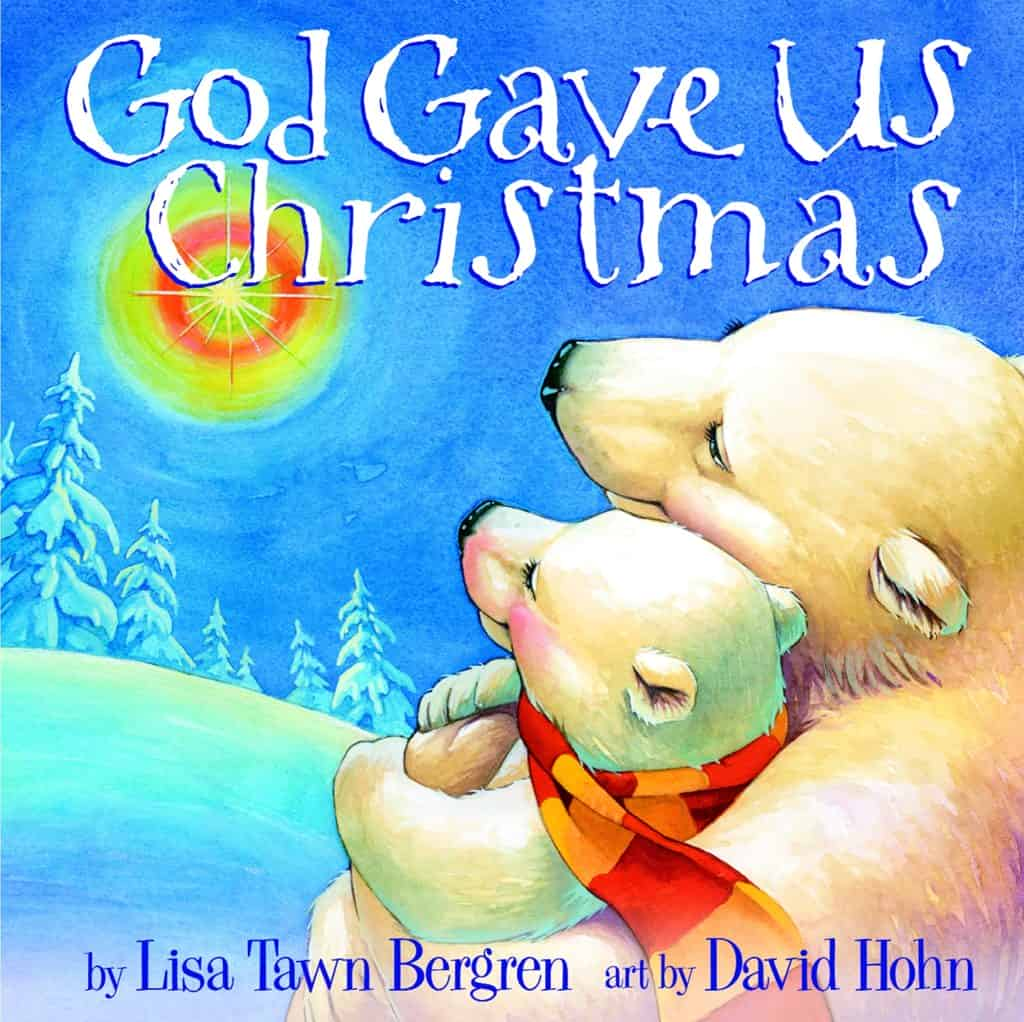
The "God Gave Us Christmas" book from Lisa Tawn Bergren is a great way to keep Christ in Christmas

7. Read faith-centered Christmas books.

One of our family’s Christmas traditions is opening a Christmas book each evening Dec. 1 through 24. We have a wide array of books from traditional secular Christmas stories to silly ones to faith-based ones.

We enjoy “The Animals’ Christmas Eve,” which tells the story of Jesus’ birth from the animals in the manger. Another great one is “God Gave Us Christmas” from Lisa Tawn Bergren. (I love the entire “God Gave Us” series from her!)

What is gratitude in the Bible? Verses about thankfulness

Discover how Biblical gratitude transforms everyday family life and strengthens your faith.

Recently, I was driving with my mom and daughter when the car behind us rear-ended us at a stoplight. It had already been a hard few weeks, and this felt like the “icing on the cake.” 

My heart raced, but within moments, gratitude started to settle in. We were all OK. The man who hit us was kind and apologetic. Even the cupcakes for my daughter’s birthday party survived the impact.

What does the Bible say about gratitude Pinterest image 1

As we drove away, my mom gently said, “God really took care of us today.” She was right. What could have been a disaster became a reminder of God’s protection and faithfulness. 

My daughter chimed in with her own version of thanks, echoing what she’d heard from my mom and me. Three generations, each finding a reason to be thankful in the middle of a frustrating day.

That moment reminded me that gratitude doesn’t wait for life to go smoothly. It grows when we choose to see God’s hand in the small mercies tucked inside messy moments.

But what is gratitude in the Bible, really? Is it just feeling thankful when life is going well? Or is there something deeper? Something that could actually transform how we live, parent and walk with God?

The truth is, Bible verses about thankfulness aren’t just nice sentiments to cross-stitch and hang on our walls. They’re invitations into a way of life that changes everything. 

Biblical gratitude isn’t about pretending hard things aren’t hard. It’s about training our hearts to see God’s goodness even when life feels overwhelming.

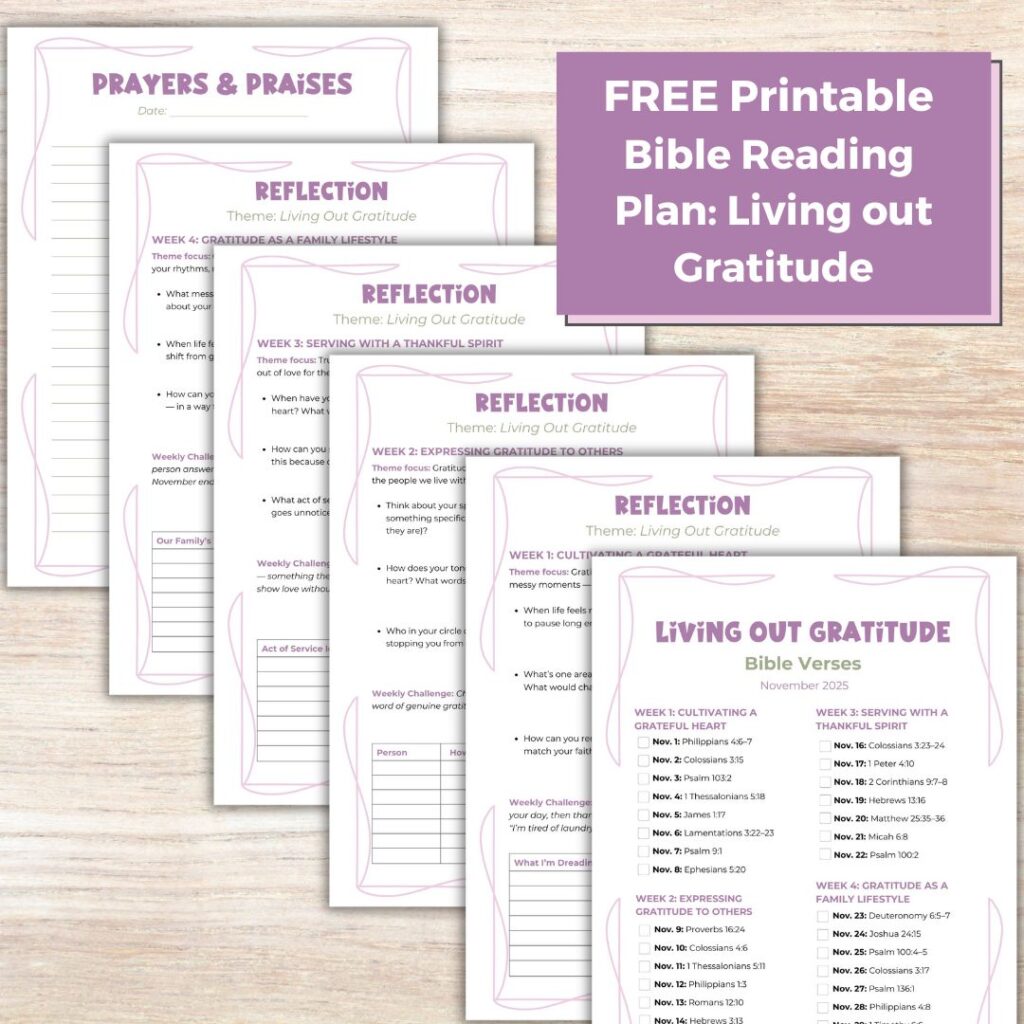
This November, I’m diving into Biblical gratitude in a fresh way with our free Living Out Gratitude Bible Reading Plan. And I’d love for you to join me as we explore together how a grateful heart isn’t just a nice idea. It’s a spiritual practice that brings peace, joy and deeper connection with Christ Jesus.

Download the free Bible reading plan about gratitude here

Affiliate links are used in this post, if you make a qualifying purchase via my link, I receive a small percentage of the sale at no additional cost to you. It helps support my blog, so thank you for your support! Read my full disclosure here.

What is gratitude in the Bible?

When we talk about what gratitude means in Scripture, we’re talking about so much more than a warm fuzzy feeling. Biblical gratitude is a posture of worship. It’s a deliberate choice to recognize God’s goodness and respond with thanksgiving, regardless of our circumstances.

In the Old Testament, gratitude was woven into the fabric of Israel’s worship. The psalmist declares in Psalm 100:4, “Enter his gates with thanksgiving and his courts with praise; give thanks to him and praise his name.” 

Notice that thanksgiving comes first before we even enter into worship. Gratitude isn’t the result of getting everything we want. It’s the door through which we approach the Almighty God.

The New Testament deepens this understanding. The Apostle Paul writes in Colossians 3:15-17 about letting the peace of Christ rule in our hearts and being thankful. He connects gratitude directly to the word of Christ dwelling in us richly.

When we’re filled with God’s Word, thankfulness flows naturally through spiritual songs, through our words and through our actions done in the name of the Lord Jesus.

Biblical gratitude is both an attitude and an action. It’s cultivating a heart of gratitude while also expressing it through the fruit of our lips, good works and a sacrifice of praise. It’s recognizing that every good gift and every perfect gift comes from the Father of lights, who doesn’t change like shifting shadows (James 1:17).

Here’s what makes Biblical gratitude different from the world’s version: it’s not conditional. We don’t give thanks only when life is comfortable. First Thessalonians 5:18 tells us to “give thanks in all circumstances; for this is God’s will for you in Christ Jesus.”

That’s radical. That’s countercultural. And that’s exactly what transforms an attitude of gratitude from a nice idea into a powerful spiritual practice.

When we understand gratitude as the will of God, it changes how we approach difficult times, small frustrations and even the mundane moments of everyday life. It becomes less about our feelings and more about our obedience and trust in God’s character.

Why gratitude matters in motherhood

If motherhood teaches us anything, it’s that we can’t control most of what happens in a day. The toddler meltdown in the grocery store. The science project due tomorrow that we’re just now hearing about. The comparison trap that hits when we scroll past another mom who seems to have it all together.

In the chaos and exhaustion of raising kids, gratitude can feel like one more thing on the list. Gratitude can seem like something we “should” do but don’t have the energy for. 

But here’s the beautiful truth: gratitude isn’t another burden. It’s actually one of the best ways God gives us to find peace in the middle of the mess.

When we practice gratitude, something shifts in our hearts and minds. Research shows that grateful people experience better mental health, less anxiety and more resilience in difficult circumstances.

But more importantly, Scripture promises us that when we bring our requests to God with thanksgiving, “the peace of God, which transcends all understanding, will guard your hearts and your minds in Christ Jesus” (Philippians 4:6-7).

That peace isn’t dependent on our circumstances changing. It’s a supernatural gift that comes when we choose to focus on God’s goodness instead of our problems. A grateful heart doesn’t ignore the hard things. It simply refuses to let the hard things have the final word.

The importance of gratitude in motherhood can’t be overstated. When we model thankfulness for our children, we’re teaching them to recognize God’s blessings even in small things. We’re showing them that joy isn’t found in perfect circumstances but in a relationship with a good and faithful God.

And in those moments when we feel like we’re failing at everything else? Gratitude becomes our lifeline. It reminds us that God’s grace is sufficient, His love never wavers and even our imperfect efforts matter when offered with a thankful heart.

How to live out gratitude

Living out Biblical gratitude isn’t about waiting until we feel thankful. It’s about making intentional choices that cultivate gratitude as a way of life. Here are four practical ways to embrace the transformative power of gratitude in your own life and home.

Cultivating a grateful heart

Gratitude starts internally, in the quiet places of our hearts where we choose what we’ll focus on. King David understood this. Even in the midst of being hunted by enemies, hiding in caves and facing betrayal, David wrote psalm after psalm of thanksgiving. His secret? He intentionally turned his attention to God’s character and past faithfulness.

We can do the same. When difficult times hit—and they will—we can train ourselves to look for God’s goodness in the small things. The way the morning light streams through the window. A child’s laughter. A friend’s text message at just the right moment. These aren’t accidents; they’re reminders that God is present and active in our everyday life.

Psalm 103:2 says, “Praise the Lord, my soul, and forget not all his benefits.” Sometimes cultivating a grateful heart means deliberately remembering.

What has God done for you this week? This month? This year? When we make remembering a practice, gratitude becomes our natural response.

Try this: Before your feet hit the floor each morning or before your head hits the pillow each night, name three things you’re thankful for. It might feel mechanical at first, but over time, this small practice trains your heart to notice God’s blessings throughout the very day.

Expressing gratitude to others

Biblical gratitude isn’t meant to stay locked inside us. The Word of Christ dwelling in us should overflow into how we treat our family members, friends and even strangers.

Colossians 3:16-17 connects being filled with God’s Word to speaking to one another with psalms, hymns and spiritual songs as well as doing everything in the name of our Lord Jesus Christ with thanksgiving.

What would it look like to express gratitude more freely in your home? To tell your husband you appreciate how hard he works, even when the little things he does feel invisible to everyone else? To praise your kids for good deeds and kind words, rather than only correcting what they do wrong?

Small ways of showing appreciation create a culture of gratitude in our families. A note tucked into a lunchbox. A genuine “thank you” for helping with chores. Taking time to recognize someone’s effort, even when the result wasn’t perfect.

What does the Bible say about gratitude Pinterest image 13

The Apostle Paul regularly expressed gratitude for the people in his life. His letters are filled with thanksgiving for fellow followers of Jesus for their faith, their love and their partnership in the gospel. When we follow his example, we bless others while simultaneously deepening our own heart of gratitude.

Serving with a thankful spirit

There’s a direct connection in Scripture between gratitude and service. When we truly recognize God’s blessings in our lives—the gift of salvation, God’s unfailing love, His daily provision—the appropriate response is to serve others with joy.

Hebrews 12:28 says, “Therefore, since we are receiving a kingdom that cannot be shaken, let us be thankful, and so worship God acceptably with reverence and awe.” 

Our gratitude to God naturally expresses itself through good works done for His glory.

This is where gratitude moves from internal feeling to external action. We serve our families not as a burden but as a sacrifice of thanksgiving.

We look for opportunities to bless others because we’re overflowing with awareness of how we’ve been blessed.

We make a joyful noise in our worship not because we have perfect voices, but because we have hearts full of songs of praise for God’s goodness.

Even in the mundane tasks like folding laundry, making dinner, driving to soccer practice, we can cultivate a thankful spirit by remembering that we serve the Lord Christ (Colossians 3:23-24). Every act of service, done with gratitude, becomes worship.

Gratitude as a family lifestyle

The goal isn’t just personal gratitude. It’s making thankfulness a way of life for our entire family. 

When our kids grow up in a home where gratitude is practiced daily, they learn that recognizing God’s faithfulness isn’t something we do occasionally; it’s who we are.

Start small. At dinner, go around the table and let each person share one thing they’re grateful for. Create family traditions around thanksgiving not just in November, but year-round.

Make gratitude activities part of your rhythm: a gratitude jar where family members add notes throughout the week, or a gratitude scavenger hunt where kids look for evidence of God’s love in creation.

The beauty of making gratitude a family lifestyle is that it shifts the atmosphere of your home. Instead of focusing on what we lack or what went wrong, we train ourselves to see the good things God is doing all around us. We become grateful people who naturally point others toward God’s goodness.

Psalm 145:4 says, “One generation commends your works to another; they tell of your mighty acts.”

When we live out gratitude consistently, we’re passing down a legacy of faith to our children by teaching them to recognize God’s work in every aspect of our lives.

Examples of gratitude in the Bible

Scripture is filled with stories of gratitude in the Bible that show us what thankfulness looks like in action. These aren’t just ancient stories. They’re powerful examples that speak directly to our lives today.

King David stands out as a man who expressed gratitude constantly. His psalm of thanksgiving in 1 Chronicles 16 overflows with shouts of grateful praise: “Give praise to the Lord, proclaim his name; make known among the nations what he has done.”

David wrote songs of praise even when he was running for his life, proving that gratitude isn’t dependent on easy circumstances.

The Apostle Paul is another powerful example. Despite being imprisoned, beaten, shipwrecked and rejected, Paul’s letters are filled with thanksgiving. He thanks God for churches, for fellow believers, for the grace of God at work in people’s lives.

In Philippians, a book of the Bible written from prison, Paul says he’s learned the secret of being content in any situation, and that secret is rooted in gratitude and trust in Christ Jesus.

Jesus Himself modeled gratitude for us. At the Last Supper, knowing He was about to face crucifixion, Jesus took bread and “gave thanks” (Matthew 26:26). Even in His darkest hour, gratitude was His posture.

He thanked the Father for hearing Him when He raised Lazarus (John 11:41). He recognized that everything good comes from God, and He lived in constant communion with His Father.

These examples of gratitude in the Bible remind us that thankfulness isn’t about our circumstances. It’s about recognizing God’s character, faithfulness and love, no matter what we’re facing.

Practical ways to practice gratitude

If you’re wondering how to move from understanding gratitude to actually living it out, here are some realistic, family-friendly ways to make thankfulness a daily practice.

Start a Christian gratitude journal. 

There’s something powerful about writing down what we’re thankful for. My Christian Woman’s Gratitude Journal includes prompts specifically designed to help you connect gratitude to Scripture and prayer.

When you write it down, you create a record of God’s faithfulness that you can look back on during difficult times.

Create a family gratitude jar. 

Keep a jar in a central location with slips of paper nearby. Throughout the week, family members can write down things they’re thankful for and add them to the jar.

At the end of each month, read them together and celebrate God’s goodness.

Try gratitude activities designed for families.

Faith-based gratitude activities help kids engage with thankfulness in hands-on ways. Create a “grateful tree” where family members add leaves with things they’re grateful for.

Do a gratitude scavenger hunt where kids look for evidence of God’s love in nature. Make “thankful turkeys” where each feather represents something they appreciate.

Use printable resources. 

Sometimes we need a little structure to build new habits. Download free printables from the Families With Grace Printables Library to guide your family’s gratitude practice.

The Living Out Gratitude Bible Reading Plan is specifically designed to help you explore thankfulness Scripture by Scripture throughout the month.

Or try this simple, printable gratitude journal workbook with prompts for children.

Incorporate gratitude into existing routines. 

You don’t need to add hours to your day. Simply add a gratitude moment to bedtime prayers, car rides or mealtimes. Ask, “What was the best thing about today?” or “Where did you see God at work?”

The important thing isn’t perfection, it’s consistency. Small, daily practices of gratitude accumulate into a transformed heart and home.

Conclusion

Mama, I know life is full and your plate is overflowing. The last thing you need is another expectation or one more “should” added to your list.

But here’s the beautiful truth about gratitude: it’s not about doing more. It’s about seeing more—seeing God’s goodness right where you are, in the middle of the messy, ordinary, exhausting, beautiful life He’s given you.

Biblical gratitude isn’t about pretending everything is perfect. It’s about recognizing that even when everything isn’t perfect, God is still good. His love is still unfailing. His grace is still sufficient.

And every good and perfect gift in your life, including the challenging parts that are growing you, comes from His hand.

As you practice gratitude this month, be gentle with yourself. Some days will feel easier than others. Some days you’ll remember to give thanks before your feet hit the floor, and other days you’ll collapse into bed realizing you forgot entirely. That’s OK. God isn’t looking for perfect gratitude. He’s looking for willing hearts that want to draw closer to Him.

Let this be the month you discover how the transformative power of gratitude can shift your perspective, deepen your faith and change the atmosphere in your home. Let thanksgiving become your natural response, not because life is easy, but because God is faithful.

Grow deeper this month with the Living Out Gratitude Bible Reading Plan—a free printable designed to help you put Biblical gratitude into practice every day. Download the free Living Out Gratitude Bible Reading Plan.

Download the free Bible reading plan about gratitude here

Encouraging Bible verses about loneliness (perfect for moms!)

Practical encouragement and Scriptures for motherhood’s lonely moments

The weird thing about motherhood nobody ever talks about is the loneliness. Yes, you’re surrounded nearly constantly by the people who love you and need you most, but even in the middle of the fray, feelings of loneliness can creep in.

It’s a strange kind of lonely in motherhood. Often it comes from feeling unseen, overlooked and even discarded. Maybe you miss the you who is more than a mother. Maybe you want to connect with friends, but you’re all too busy being mom to make anything happen.

Bible verses about loneliness Pinterest image 04

Maybe you miss adult conversation, or you long for a friend who truly understands what you’re going through. Maybe you’re carrying silent struggles in your heart and don’t know who you can trust to share them with.

I’ve been there in my own life, mama. I know what it’s like to smile on the outside while feeling lonely on the inside. And the truth is you’re not alone in those feelings. The Bible talks a lot about loneliness and reminds us again and again that even when we feel isolated, God is with us.

Loneliness in motherhood is real — even for us introverts.

That’s why I put together a free Bible reading plan on loneliness and God’s presence. It’s designed especially for Christian moms who need encouragement in this season.

You can download it here, and follow along as we spend the month focusing on Scriptures that remind us we are never truly alone.

But before we jump into the plan, I want to share some of the most encouraging Bible verses about loneliness that have carried me through the quiet, heavy moments of motherhood and reminded me that God’s presence never leaves.

Download the free 31-day "Never Alone" Bible reading plan

God sees us in our loneliness

One of the hardest parts of loneliness is feeling invisible — like nobody notices what you’re going through. As moms, we pour ourselves out for our families in a hundred unseen ways every day. And while we don’t serve to be noticed, sometimes it hurts to feel like nobody really sees the effort, the exhaustion or the heart behind it all.

The beautiful truth is this: God sees you. Even when others don’t.

God sees the overlooked

“She gave this name to the Lord who spoke to her: “You are the God who sees me,” for she said, “I have now seen the One who sees me.”

Genesis 16:13 (NIV)
Bible verses about loneliness Pinterest image 13

These words come from Hagar, a servant who was mistreated and cast aside. Alone in the wilderness, she felt abandoned, but God met her there.

He protected her, encouraged her through an angel and promised her son’s descendants would become a nation.

What’s remarkable is that Hagar, a woman with little standing, was the first to call God El Roi, “the God who sees me.” (She was also the first account in the Bible of an angel appearing to a person!)

The same God who noticed Hagar in the desert sees you when you’re wiping counters late at night, folding laundry for the third time in a week or holding it all together when you feel like falling apart.

God knows us completely

“You have searched me, Lord, and you know me. You know when I sit and when I rise; you perceive my thoughts from afar. You discern my going out and my lying down; you are familiar with all my ways. Before a word is on my tongue you, Lord, know it completely.”

Psalm 139:1-4 (NIV)
Bible verses about loneliness Pinterest image 14

God not only sees us like a casual acquaintance would, He knows every part of us inside and out. Throughout your path of life, God has been part of every moment and loving you through it all.

We can lean into the presence of God, knowing He truly understands us. When loneliness whispers you’ve been forgotten, God’s Word whispers back that you are fully known and deeply loved.

God holds us steady

“So do not fear, for I am with you; do not be dismayed, for I am your God. I will strengthen you and help you; I will uphold you with my righteous right hand.”

Isaiah 41:10 (NIV)
Bible verses about loneliness Pinterest image 15

This verse has gotten me through one hard time after another ever since I was a child and learned it. The “do not fear” part is what initially drew me.

But, later in life, the second part is what has gotten me. Knowing I am held in the right hand of God being strengthened and helped by Him comforts my heart. Your Father in heaven is holding onto you while you are holding onto your children.

When a feeling of loneliness tries to creep in, remember that you are never alone. Not only is God with you, but you are held in the mighty hand of God.

There is no safer pace to be. His presence is steady, even in difficult seasons.

Mama, you may feel invisible at times, but you are never unseen. God notices you. He values the work you’re doing, both big and small, and He promises to walk beside you every step of the way.

A step for your week

This week, try writing “God sees me” on a sticky note and placing it somewhere you’ll see it often — maybe on the bathroom mirror or next to the kitchen sink. Let it be a daily reminder that even in the loneliest moments of motherhood, you are never out of His sight.

Bible verses about loneliness in the lives of God’s people

Loneliness isn’t new. Even in the pages of the Bible, we see men and women of faith wrestling with deep feelings of isolation. Sometimes, it came in the form of betrayal. Other times, it was discouragement or fear. If you’ve ever felt like no one understands what you’re carrying, you’re in good company.

These biblical figures remind us that loneliness doesn’t mean weakness or failure. It’s part of our experience as human beings. But in every story, God showed up.

Elijah’s loneliness

“He came to a broom bush, sat down under it and prayed that he might die. ‘I have had enough, Lord,’ he said. ‘Take my life; I am no better than my ancestors.’”

1 Kings 19:4 (NIV)

Elijah was a prophet who had just experienced a huge victory on Mount Carmel, proving God’s power over false idols. And yet, right after this incredible high, he ran into the wilderness, exhausted and afraid. He felt so alone that he wanted to give up.

As moms, we can relate to that crash after a big moment — the day after the birthday party you planned, the week after finishing a big project at work, the season of caring for a sick child. Loneliness can sneak in when our strength runs out. But just like with Elijah, God met him where he was. He didn’t scold him. Instead, He provided food, rest and gentle encouragement.

David’s loneliness

“I cry aloud to the Lord; I lift up my voice to the Lord for mercy. I pour out before him my complaint; before him I tell my trouble. When my spirit grows faint within me, it is you who watch over my way. In the path where I walk people have hidden a snare for me. Look and see, there is no one at my right hand; no one is concerned for me. I have no refuge; no one cares for my life.”

Psalm 142:1–4 (NIV)

David knew what it was to be surrounded by people and still feel utterly alone. In many of his Psalms, we hear the raw honesty of his prayers. He admitted when he was hurting and poured out his soul to God.

I remember in the early days of motherhood feeling like I was drowning. And I remember wondering if anyone would even notice if I did.

Because that’s life and the loneliness that can be part of motherhood. David understood this feeling: “no one is concerned for me…no one cares for my life.”

But, he also knew one of the best ways to get through a season like this was complete honesty with God. God’s love is bigger than our complaints and hurts. He already knows what we’re feeling; being honest with Him keeps our relationship strong.

We can be honest about such things as loneliness, frustration, questions and hurt. We don’t have to pretty things up for God. We just have to show up.

Paul’s loneliness

“At my first defense, no one came to my support, but everyone deserted me. May it not be held against them. But the Lord stood at my side and gave me strength, so that through me the message might be fully proclaimed and all the Gentiles might hear it. And I was delivered from the lion’s mouth.”

2 Timothy 4:16–17 (NIV)
Bible verses about loneliness Pinterest image 16

These words are written by Paul. This is the same Paul who was formerly Saul. He was persecuting Christians and then had an encounter with God when Christ Jesus appeared to him in a bright light and changed his heart completely.

And now he was being persecuted and imprisoned himself for planting churches and preaching the Word of God. Yet, in one of his darkest times, he was deserted. Those around him left him on his own, but the Lord God stayed with him through every moment.

We don’t have to be going on trial to feel like we’ve been deserted. If you’ve ever felt like you didn’t have a friend to call or like you’re carrying motherhood alone, Paul’s words remind us of an unshakable truth: when others walk away, the Lord stands beside us.

Jesus’ loneliness

“Then he said to them, ‘My soul is overwhelmed with sorrow to the point of death. Stay here and keep watch with me.’”

Matthew 26:38 (NIV)

Even Jesus felt the sting of loneliness. In His deepest moment of anguish in Gethsemane just before His crucifixion, His closest friends couldn’t stay awake to support Him. He cried out to His Father instead.

And our God of all comfort sent an angel to strengthen and comfort His own Son. Even though the love of Christ for us was so strong He was willing to die for us, He still had a broken heart in His own humanity of knowing what was ahead.

Sometimes we can struggle and feel like nobody understands our pain or situation. And that’s a lonely place to live.

The good news is, though, that Jesus understands it all. He’s been there and felt the sting of abandonment. He promises to never leave you in your hour of need.

A step for your week

This week, follow the example of David and Paul by writing out an honest prayer to God. Tell Him exactly how you’re feeling — no filters, no masks. He already knows your heart, but something shifts in us when we lay it bare before Him.

God’s comfort in lonely seasons

One of the sweetest truths in Scripture is that God doesn’t pull away from us when we’re hurting. In fact, His Word tells us He draws near to us in our brokenness. When moments of loneliness feel heavy, God’s presence brings comfort, peace and hope.

God is close to the brokenhearted

“The Lord is close to the brokenhearted and saves those who are crushed in spirit.”

Psalm 34:18 (NIV)
Bible verses about loneliness Pinterest image 17

When we are in the middle of a hard season, we can feel crushed under a heavy weight that won’t lift. But God’s promises — like this one in Psalm 34 — hold true regardless. He comes closer to us when we need Him most.

God’s unending love is drawn to our lonely hearts. He is right in the middle of the ache.

Our mama hearts can break is so many ways. From a toddler tantrum that leaves you exasperated to a teen making a heart-wrenching decision, the challenges of motherhood can leave us feeling alone and disheartened.

God meets us there, not with judgment, but with compassion. The power of the Holy Spirit can soothe and comfort our broken hearts.

God goes with us

“Be strong and courageous. Do not be afraid or terrified because of them, for the Lord your God goes with you; he will never leave you nor forsake you.”

Deuteronomy 31:6 (NIV)
Bible verses about loneliness Pinterest image 18

These words were first spoken to the Israelites in the Old Testament as they faced uncertainty, but they are just as true for us today. God goes with us. He doesn’t leave us behind or forget us.

Motherhood is full of moments that feel overwhelming — the diagnosis you weren’t expecting, the sleepless nights that stretch into years, the days when you feel like you’re failing. But God’s promise here is unshakable: you don’t face any of it alone.

We can feel the peace of God even in just knowing He won’t leave us or forget about us. No matter what is going on and what we are facing, He is right there with us.

God gives peace in His presence

“Have I not commanded you? Be strong and courageous. Do not be afraid; do not be discouraged, for the Lord your God will be with you wherever you go.”

Joshua 1:9 (NIV)

This is a similar verse to the one before. Again, the Israelites need encouragement to walk into God’s promised land. And, again, God is provided it for them.

Discouragement and loneliness often go hand-in-hand. I’ve struggled with both in my own life. They’re the quiet voice saying, “You’re not enough. You’re not on your own. Nobody wants to hear what you have to say.”

But, the love of God speaks differently: “Be strong. Be courageous. I am with you.”

When I’ve walked through seasons of discouragement, this verse has reminded me to lean into God’s presence instead of my own feelings. Feelings come and go, but His presence is steady. And I’m so incredibly thankful for that.

The Holy Spirit is our Comforter

“And I will ask the Father, and he will give you another advocate to help you and be with you forever—the Spirit of truth. The world cannot accept him, because it neither sees him nor knows him. But you know him, for he lives with you and will be in you. I will not leave you as orphans; I will come to you.”

John 14:16–18 (NIV)
Bible verses about loneliness Pinterest image 21

In the New Testament, after Jesus’ death and resurrection, He promises that we’ll never be left alone. His promise to leave a comforter for His disciples hold true today for us as well.

Even in the loneliest moments — when the house is quiet, or when it feels like no one understands — His Spirit is with you.

You are not abandoned. You are not unseen. The Spirit of God Himself is your comforter, your advocate and your strength. He is our helper fit for every part of our lives.

A step for your week

When loneliness feels heavy this week, pause for just a minute. Take a deep breath and whisper, “God, thank You that You are with me right now.”

It doesn’t have to be fancy. That simple reminder can shift your heart back toward His presence.

Godly friendships in seasons of loneliness

While God’s presence is always with us, He also designed us to live in community. We weren’t meant to do life alone.

Friendship doesn’t always come easily in the busy years of motherhood, but these Bible verses about friendship and loneliness remind us how life-giving it can be to spend time with God’s people.

Two are better than one

“Two are better than one, because they have a good return for their labor: If either of them falls down, one can help the other up. But pity anyone who falls and has no one to help them up.”

Ecclesiastes 4:9–10 (NIV)

Motherhood has plenty of days where we fall — whether it’s emotionally, spiritually or just plain physically after chasing little ones. Having a Godly friend to help us back up makes the load lighter.

One thing I’ve learned is that often we have to be intentional about friendships. We can’t expect others to always know when we need them or keep pursuing us as friends when we give nothing back.

From a casual friend to a best friend, finding little ways to stay in contact can make a big difference in seasons like this. I’ve been encouraged by a text from a friend saying she was praying for me or by having 20 minutes to chat with a friend unexpectedly.

God reminds us that we really do need each other, especially when loneliness hits.

A friend who loves at all times

“A friend loves at all times, and a brother is born for a time of adversity.”

Proverbs 17:17 (NIV)

True friends don’t disappear when life gets messy. They’re the ones who walk with us through sleepless nights, unexpected diagnoses or just the never-ending laundry piles.

As moms, it’s easy to think we don’t have time for friendships. But sometimes friendship isn’t about grand outings or long phone calls; it’s about showing up in small ways. A quick message, a handwritten note or a shared laugh can be the lifeline that reminds another mom she’s not alone.

For example, after a friend of mine had a baby, I spent time at her house, playing with her older children and washing her dishes. It was little, small stuff. But recently she mentioned this to me as something she’s always remembered even now seven years later.

Sometimes just being God’s hands and feet on earth can make a big difference. And serving others with good cheer can also bring hope and healing to our own hearts.

Spurring each other on

“And let us consider how we may spur one another on toward love and good deeds, not giving up meeting together, as some are in the habit of doing, but encouraging one another — and all the more as you see the Day approaching.”

Hebrews 10:24–25 (NIV)

Motherhood can be isolating, but the Bible calls us to stay connected. We need encouragement, and we’re also called to be encouragers.

It doesn’t mean we have to lead a Bible study or host big gatherings in our own home. Sometimes it means joining a local mom group, inviting a friend for coffee or even connecting on social media where faith and encouragement are at the center. When we show up for one another, we reflect God’s love in powerful ways.

It can even be taking a moment in the bathroom at Target to distract a fussy baby getting his diaper changed to give his mama just a moment of comfort and fellowship.

A step for your week

This week, ask God to bring one person to mind who may need encouragement. Then reach out. Send a quick text, drop off a note or simply say, “I’m thinking of you today.”

That one small act could be exactly what she needs to know she’s not alone.

Hope in God’s presence when you feel lonely

Loneliness can feel like it will last forever. But the truth is, our present feelings don’t have the final word. God’s promises remind us that He has a bigger story for our lives filled with His presence, peace and everlasting hope.

God is our portion forever

“Yet I am always with you; you hold me by my right hand. You guide me with your counsel, and afterward you will take me into glory. Whom have I in heaven but you? And earth has nothing I desire besides you. My flesh and my heart may fail, but God is the strength of my heart and my portion forever.”

Psalm 73:23–26 (NIV)

Sometimes what we need most in the midst of lonely seasons and difficult times is a reminder that God is with us now and forever. Because while God is our Savior, He is also our best friend.

The end of this passage is perfect for the exhaustion and heartache of motherhood. I look back now at the days after my second child was born and still cannot explain how I survived it physically other than God. He strengthened my heart and my body.

We can rest knowing God’s presence will carry us not just today, but forever.

Nothing can separate us from God’s love

“For I am convinced that neither death nor life, neither angels nor demons, neither the present nor the future, nor any powers, neither height nor depth, nor anything else in all creation, will be able to separate us from the love of God that is in Christ Jesus our Lord.”

Romans 8:38–39 (NIV)
Bible verses about loneliness Pinterest image 19

Loneliness tries to convince us that we are unloved and unwanted. Because, let’s be frank, sometimes our feelings lie to us.

But Scripture is clear: absolutely nothing can separate us from God’s love. Not our mistakes, not our circumstances, not even our feelings of isolation.

As moms, when our hearts ache for connection, this promise reassures us that we are held by a love that never lets go.

One day God’s presence will wipe away every tear

“And I heard a loud voice from the throne saying, ‘Look! God’s dwelling place is now among the people, and he will dwell with them. They will be his people, and God himself will be with them and be their God. He will wipe every tear from their eyes. There will be no more death or mourning or crying or pain, for the old order of things has passed away.’”

Revelation 21:3–4 (NIV)
Bible verses about loneliness Pinterest image 20

This is the ultimate hope we cling to: a future where loneliness, grief and sorrow are no more. A day is coming when every tear will be wiped away by the very hand of God.

That truth doesn’t erase the pain of loneliness now, but it anchors us in hope. We can face today knowing that eternity with Him is secure — and in that eternity, we’ll never know loneliness again.

A step for your week

Write down one verse of hope (maybe Romans 8:38–39 or Revelation 21:4) and place it somewhere you’ll see it daily. Let it be a reminder that no matter what today holds, God’s presence is your forever promise.

You are never truly alone

Loneliness often shows up in motherhood. It can feel overwhelming to carry so much responsibility while wondering if anyone really sees you. But the good news of Scripture is this: you are never truly alone.

From Hagar in the wilderness to David in the caves, from Paul in prison to Jesus in the garden — God’s presence was there in their loneliness, and His presence is with you in yours. The same God who promises to never leave or forsake His children walks beside you in the messy, beautiful, exhausting, joy-filled journey of motherhood.

If loneliness has been whispering that you’re unseen or forgotten, let God’s Word whisper something different: you are loved, you are noticed and you are never abandoned.

To help you dive deeper into these truths, I created a free reading plan of Bible verses about loneliness. It’s designed especially for moms like you who need encouragement in this season. You can grab your copy here:

Download the free 31-day "Never Alone" Bible reading plan

And if you’re longing for community, I’d love to invite you to join us in the Christian Moms with Grace Facebook group. It’s a space for encouragement, prayer and connection with other moms who understand the ups and downs of faith-filled motherhood.

You don’t have to walk this road alone. God is with you, and we’d love to walk alongside you, too.

Mama, when the quiet moments feel heavy or the days feel isolating, take heart: your Father in heaven sees you, knows you and holds you close.

Best women’s devotional Bible? A top pick for Christian moms

An honest review of The Message Women’s Devotional Bible and why it’s a great choice for encouragement and spiritual growth

I’ve been a fan of study Bibles from the time I was a teenager. Devotional Bibles, however, are newer to me — and as a busy mom I’m quite loving them for my daily quiet time.

Over the past couple of years, I’ve explored a range of women’s Bibles — from the “ESV Women’s Study Bible” to the “She Reads Truth CSB”.

But when I picked up “The Message Women’s Devotional Bible,” it felt like the perfect blend of study depth and devotional encouragement. It’s easily the best women’s devotional Bible I’ve looked at.

Mom life is busy, so I especially appreciate Biblical resources that help me grow in my relationship with God in easy, concise ways.

I received a copy of “The Message Women’s Devotional Bible” at no charge in exchange for providing a review and social media posts about it. All opinions, however, are completely my own and not influenced by the free copy.

What is a devotional Bible?

If you’re not sure what sets a devotional Bible apart, here’s the quick breakdown.

  • Regular Bibles contain just the Biblical text in a specific translation.
  • Study Bibles add background notes, historical context, detailed maps and commentary to help you dig deeper into God’s Word.
  • Devotional Bibles combine the best of both — the complete Biblical text plus devotionals, reflection questions and other tools to help you apply Scripture to your everyday life.

Some devotional Bibles lean heavily on inspiration. Others, like “The Message Women’s Devotional Bible,” balance encouragement with solid teaching, making it both uplifting and practical.

Because this edition is built on The Message translation, the language is fresh, modern and easy to understand, which is perfect for quick daily readings or longer reflection time.

First impressions

The cover design of “The Message Women’s Devotional Bible” is straightforward and clean. I got the terracotta leather-look edition. The front includes a gold triangle overlaid with a circle. 

Best Women's Devotional Pinterest image 1

To me, this represents the Holy Trinity in a simple way. The Bible is also available in hard cover and paperback with a cream cover featuring a watercolor landscape.

The Bible, which was released Aug. 5, 2025 by NavPress, includes 320 personal reflections from Christian women.

Each devotional study coincides with a passage of the Bible and helps women in all stages of life apply Biblical principles in their own spiritual journey. 

The graphic design throughout the Bible stays with the terracotta theme and color scheme in a minimalist, clean way that’s easy to read.

Along with the devotionals, “The Message Women’s Devotional Bible” includes a variety of character profiles for both men and women of the Bible.

What makes this the best women’s devotional Bible

Besides the basics and background information, what truly sets this Bible apart is its heart. The authors begin with introducing the Bible and their vision for it.

Their goal is not to rewrite the Word of God or take away from what is in the Bible. It is, however, to make the text more applicable to women and highlight the role women played in Biblical times. All the supplemental content is written by women for other women.

For a variety of reasons, including its place in history, the Bible is strongly patriarchal and male-dominated. The authors set out to address how women fit in and how much a God who let some horrible things happen to women in Bible times (and now) is One who loves them so completely.

What I appreciate most is the lack of platitudes. There is a deep-dive into topics. In fact, some of the devotionals are noted for being a possible trigger for women who have experienced various traumas.

Deep spiritual insights

In the truth of God’s Word, we see a lot of horrible things as well as a lot of good ones. Esther, for example, is my favorite book of the Bible and one of my favorite women in the Bible.

I’ve studied the book and its characters many times. I’ve taught Bible studies about Esther and written children’s curriculum about Esther.

Best Women's Devotional Bible interior shot of the profile of Queen Vashti

Yet, “The Message Women’s Devotional Bible” included insights I’d not previously considered. We often dismiss King Xerxes’ first queen, Vashti, as being a mere blip in the story. However, she’s more than that. She was a strong woman in the Bible by her own right.

Vashti refused to be objectified by her drunk husband and his friends. She knew she’d be banished (or executed), but made the decision anyway, standing on her own principles.

And thankfully she did so to make the way for Esther to become queen and save the Jewish people. Esther was incredibly courageous in risking her life to save her people. We cannot dispute that. But would she have had any amount of courage to do so without the example of Queen Vashti standing up for herself? Maybe. Maybe not.

Yet, as the story progresses, we also take a closer look at Esther through a lens that is seldom talked about:

“People often read the book of Esther like a fairy tale in which she is chosen by the king to live happily ever after, but the reality is that Esther was a victim of sexual and racial abuse. She lived at the mercy of one of the most powerful kings in history and the patriarchal assumption that women were designed for the purpose of sexually pleasing powerful men.

“When we think about Esther’s story, we must consider the nuanced layers of conflict. Esther was pulled between two cultures and pushed by powerful men to submit but somehow maintained a purity of heart that held its own power.”

The Message Women’s Devotional Bible

These are the kind of deeper insights that help women form a deeper connection to their God and their faith. We’re left with our own reflection questions: do we have enough faith and trust in God to stand up to injustice like Vashti and Esther?

Easy to read and understand

Another reason this is the best women’s devotional Bible for Christian moms in particular is that The Message translation is the easiest mainstream translation to understand. So if you are trying to get in Bible reading and devotion time in 10 spare minutes, you need to absorb and consume as much as possible.

Beyond just reading Scripture in a Bible app, “The Message Women’s Devotional Bible” offers a translation that is easy to read alongside character profiles and devotions that are simple and impactful. It can help mamas make the most of their devotional time when devotional time is limited.

Every two or three pages of this Bible is a devotion, character profile, section introduction, book introduction or other insight to help make understanding the Bible and applying its message to everyday life.

My final thoughts

I expected to like this devotional Bible for women, but I didn’t expect to love it as much as I do. I had to literally make myself stop reading the other day so I didn’t miss a deadline and got back to work.

Anything that helps me draw closer to God through His Word is a resource I love. I’m an avid reader anyway. This felt more like reading for fun than for spiritual reasons, yet I was spiritually blessed through reading.

This isn’t just another devotional that will sit on your shelf; it’s a resource that will genuinely transform your daily walk with God.

Buy it for yourself. Buy it as a gift. Or do both!

If you’re looking for a devotional Bible for your teen, be sure to check out my review of “The Message Student Devotional Bible.”

Read more book reviews from Families with Grace.

What does a reset in the Bible look like?

A 4-week journey for moms back to God’s heart

Sometimes, I wish life had a reset button. Not the kind that erases everything, but the kind that helps me slow down, catch my breath and get back on track, especially in the busy seasons of motherhood.

The truth is, whether you’re knee-deep in laundry, wrestling through anxious thoughts or feeling spiritually dry, your heart might be whispering: “I need a reset.”

If you’ve been there, mama, you’re not alone. I’ve felt that way more times than I can count—like I’m going through the motions but missing the presence of the Lord in my everyday life.

The beautiful truth is that God, in His grace, specializes in renewal. Throughout Scripture, we see stories of people who encountered the grace of a divine reset not because they had it all together, but because they turned back to Him with weary hearts.

From the people of Israel during the Babylonian exile to Jesus Christ’s own disciples, the Bible is full of people who found a fresh start through God’s Word and the power of the Holy Spirit.

If you’re in a season where you feel scattered, distracted or spiritually dry, this post is for you. Let’s explore what it looks like to experience a Biblical reset and how you can begin again—right where you are.

(Find the link for the free 4-week Bible reading plan and refresh challenge at the end of the post!)

What does it mean to reset spiritually?

A spiritual reset isn’t about performing or proving anything to God. It’s not about starting from scratch or “being better.”

Instead, it’s about realigning your heart with God’s presence and allowing His truth to wash over your soul like clean water.

In Romans 12:2, we’re reminded not to conform to the patterns of this world, but to be transformed by the renewing of our minds. That’s where the spiritual reset begins. It isn’t in our schedules or checklists, but in our thoughts, attitudes and identity as part of the body of Christ.

Reset in the Bible Pinterest image 8

Sometimes a reset is subtle like a whisper from the Holy Spirit to spend more time with Jesus Christ. Other times, it’s a wake-up call to turn from unhealthy habits or negative mindsets and refocus our routines.

In either case, the Spirit leads us not through shame, but through gentle conviction and love.

God doesn’t demand perfection; He invites us into something better. A new beginning. A fresh perspective. A clean heart made soft again.

That’s the kind of reset Scripture promises, and it’s available to every believer who seeks the kingdom of God with sincere faith.

The prophet Isaiah reminds us that God is always doing a new thing, even when we can’t see it. He specializes in times of refreshing for His people, offering spiritual growth and transformation that goes far beyond our own strength.

A journey to spiritual renewal

Let’s go deeper into a Biblical approach to finding your reset. This isn’t about adding more to your already full plate—it’s about creating space for God to do His good work in your heart.

Renew your mind

Let’s be honest: our minds are noisy. Between social media, world events and internal stress, it’s no wonder we find ourselves filled with anxious thoughts or self-doubt. That’s why the first reset starts in our minds.

“Do not conform to the pattern of this world, but be transformed by the renewing of your mind. Then you will be able to test and approve what God’s will is—his good, pleasing and perfect will.”

Romans 12:2 (NIV)

In practical terms, this means we stop allowing the world to shape how we think and start letting God’s Word shape our perspective on earthly things.

When was the last time you paused to examine your thought life? Are your thoughts life-giving or draining? Do they draw you closer to God or do they pull you deeper into fear or comparison?

Here’s what I’ve found: when I start my day—even just five minutes—with Scripture or a quiet prayer, it sets the tone for everything else.

This doesn’t have to be really deep and involved. Even just praying while I brush my teeth or reading my Bible while I eat breakfast makes a difference.

That daily reset helps me shift my focus from what’s going wrong to what is eternally right. It’s a simple way to invite God’s presence into the ordinary moments of motherhood.

The Apostle Paul understood this struggle. In 2 Corinthians 10:5, he encourages us to take every thought captive to make it obedient to Christ Jesus.

This isn’t about perfect thinking. It’s about choosing to align our minds with Biblical truth rather than the negative mindsets that can so easily take hold.

Verses to reflect on:

(Note: The following verses are part of the 31-day free Bible reading plan about what a reset in the Bible looks like. These are summaries of the verses and not the actual text.)

  • Romans 12:1-2 – Be transformed by the renewing of your mind
  • Isaiah 26:3 – Perfect peace for those whose minds are stayed on God
  • Philippians 4:6-7 – Replace worry with prayer and receive God’s peace
  • 2 Corinthians 10:5 – Take every thought captive to make it obedient to Christ
  • Psalm 139:23-24 – Ask God to search your heart and know your anxious thoughts

Try this:

Write down a verse that encourages you and tape it to your mirror or phone lock screen. Let that be your go-to reset button when your mind starts spiraling.

Consider using the YouVersion Bible app to receive daily verses that can serve as gentle reminders throughout your day.

Rebuild your rhythms

If life has thrown your routines out the window, you’re not alone. Our family schedule in July looked nothing like it did in April—or what it will look like in September.

And that’s OK. But now is the perfect time to rebuild spiritual rhythms that can carry you through the next season.

“Teach us to number our days, that we may gain a heart of wisdom.”

Psalm 90:12 (NIV)

There’s something holy about being intentional with our time, even in the small pockets. A spiritual reset doesn’t require hours of Bible study. It might be a quick devotional while your coffee brews or a prayer whispered while packing lunches.

The key is to connect with God regularly, even in simple ways. We’re not aiming for perfection. We’re aiming for His presence!

As human beings created for relationship with our Heavenly Father, we need these consistent touchpoints with the Almighty God who loves us.

A huge part of spiritual growth is learning that God meets us in the mundane moments of our own life. Whether you’re a new mom struggling to find time or a seasoned mother juggling multiple schedules, God’s original design includes rhythm and rest.

  • Start the day with one verse and a breath prayer like, “God, You are with me”
  • Listen to worship music during chores or carpool
  • Invite your kids into your time with God, even if it’s messy
  • Use a simple Bible reading plan that fits your current season

Key verses to explore:

(Note: The following verses are part of the 31-day free Bible reading plan about what a reset in the Bible looks like. These are summaries of the verses and not the actual text.)

  • Psalm 90:12 – Teach us to number our days, that we may gain a heart of wisdom
  • Luke 5:15-16 – Jesus often withdrew to lonely places and prayed
  • Mark 1:35 – Jesus got up early to pray in a solitary place
  • Matthew 11:28-30 – Come to me and I will give you rest
  • 1 Thessalonians 5:16-18 – Pray continually and give thanks in all circumstances

Ideas to try:

  • Start the day with one verse and a breath prayer like, “God, You are with me”
  • Listen to worship music during chores or carpool
  • Invite your kids into your time with God, even if it’s messy
  • Use a simple Bible reading plan that fits your current season

The goal isn’t to create a Pinterest-worthy quiet time. It’s to build small, sustainable moments of connection and watch how those moments add up to something beautiful over time.

Reconnect with God’s presence

There are days when I look up and realize I’ve gone the entire day on autopilot. I’ve done all the things but forgotten to talk to God. I don’t say that with guilt; I say it with the honesty that sometimes life is loud, and we forget the One who gives us peace.

But here’s the beautiful truth: God never forgets us. His eyes are always upon us, and His presence never leaves us.

“You make known to me the path of life; you will fill me with joy in your presence, with eternal pleasures at your right hand.”

Psalm 16:11 (NIV)

That joy isn’t reserved for mountaintop experiences or perfect Bible studies. It’s available in the car line, the kitchen and in all the chaos of everyday motherhood.

The Holy Spirit doesn’t need a formal invitation—He’s already with you. The question is: are you aware?

Reset in the Bible Pinterest image 13

This awareness of God’s presence can transform ordinary moments into sacred ones. It’s what makes the difference between just surviving our days and truly living with purpose.

Even in his busiest seasons of leading the people of Israel, King David (who wrote these words in Psalm 16) made space to acknowledge God’s presence. He understood that recognizing God in the midst of daily life wasn’t just a good thing; it was essential for his spiritual well-being.
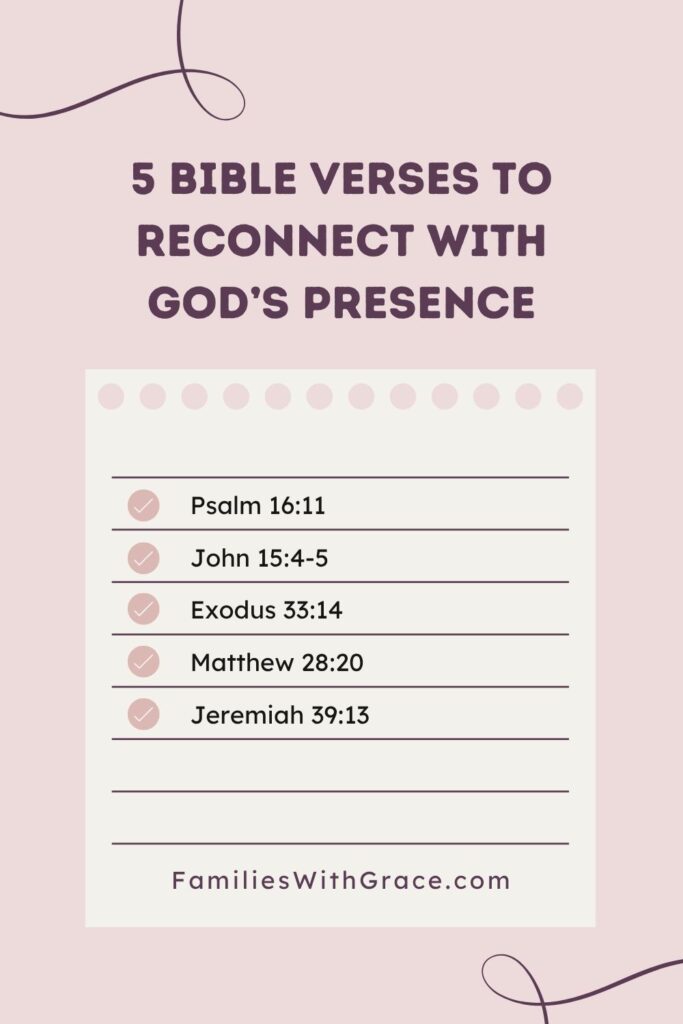
Verses to meditate on:

(Note: The following verses are part of the 31-day free Bible reading plan about what a reset in the Bible looks like. These are summaries of the verses and not the actual text.)

  • Psalm 16:11 – In your presence there is fullness of joy
  • John 15:4-5 – Remain in me, as I also remain in you
  • Exodus 33:14 – My presence will go with you, and I will give you rest
  • Matthew 28:20 – I am with you always, to the very end of the age
  • Jeremiah 29:13 – You will seek me and find me when you seek me with all your heart

Simple ways to reconnect:

  • Pause before switching tasks and say, “Thank You for being with me, God”
  • Turn ordinary moments (folding towels, walking the dog) into prayer moments
  • Keep a “God sighting” journal—where did you notice His hand today?
  • Practice gratitude for the small blessings that often go unnoticed

This week is about growing your awareness of God’s presence, not earning it. He’s already near. Just draw close, and watch how this simple shift can bring times of refreshing to your weary heart.

Recommit to growth

A reset is only powerful if we take steps forward afterward. That’s what the final week is all about: not just feeling refreshed, but living rooted in Christ Jesus for the long haul.

“So then, just as you received Christ Jesus as Lord, continue to live your lives in him, rooted and built up in him, strengthened in the faith as you were taught, and overflowing with thankfulness.”

Colossians 2:6–7

Being rooted and built up in faith doesn’t mean our lives will be storm-free, but we will be anchored when the waves hit. Like a tree with deep roots, we can weather different seasons because our foundation is secure.

Verses to meditate on:

(Note: The following verses are part of the 31-day free Bible reading plan about what a reset in the Bible looks like. These are summaries of the verses and not the actual text.)

  • Colossians 2:6-7 – Continue to live your lives in Him, rooted and built up
  • Galatians 6:9 – Let us not become weary in doing good
  • 2 Peter 1:5-8 – Add to your faith goodness, knowledge, self-control
  • Philippians 3:13-14 – Forgetting what is behind and straining toward what is ahead
  • John 15:8 – This is to my Father’s glory, that you bear much fruit

This week, take time to ask yourself:

  • What’s grown in me this month?
  • What habits do I want to carry forward?
  • Where is God calling me to trust Him more deeply?
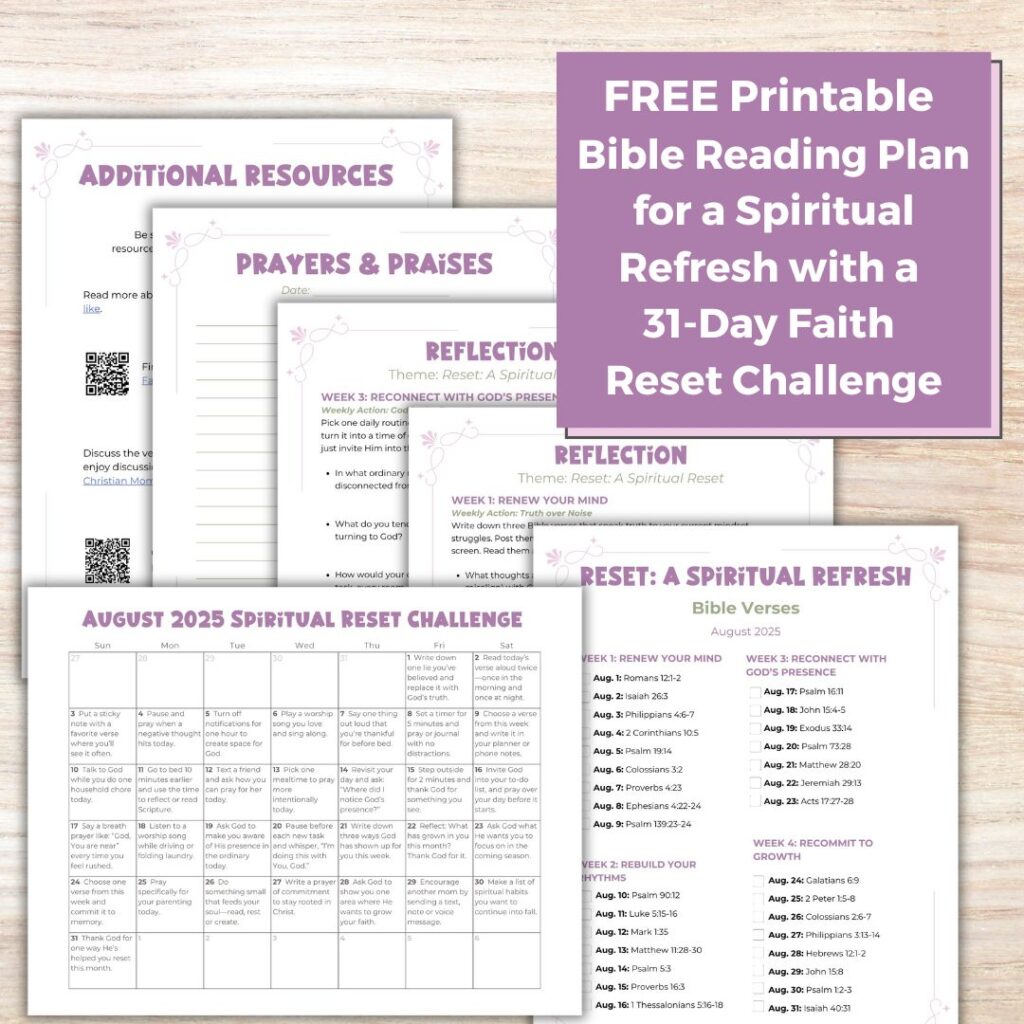
  • How can I continue to bear much fruit in my spiritual walk?

God is always doing a new thing, but we have to be willing to release the old things to embrace it. Maybe that looks like letting go of guilt over missed quiet times. Maybe it’s forgiving yourself or someone else.
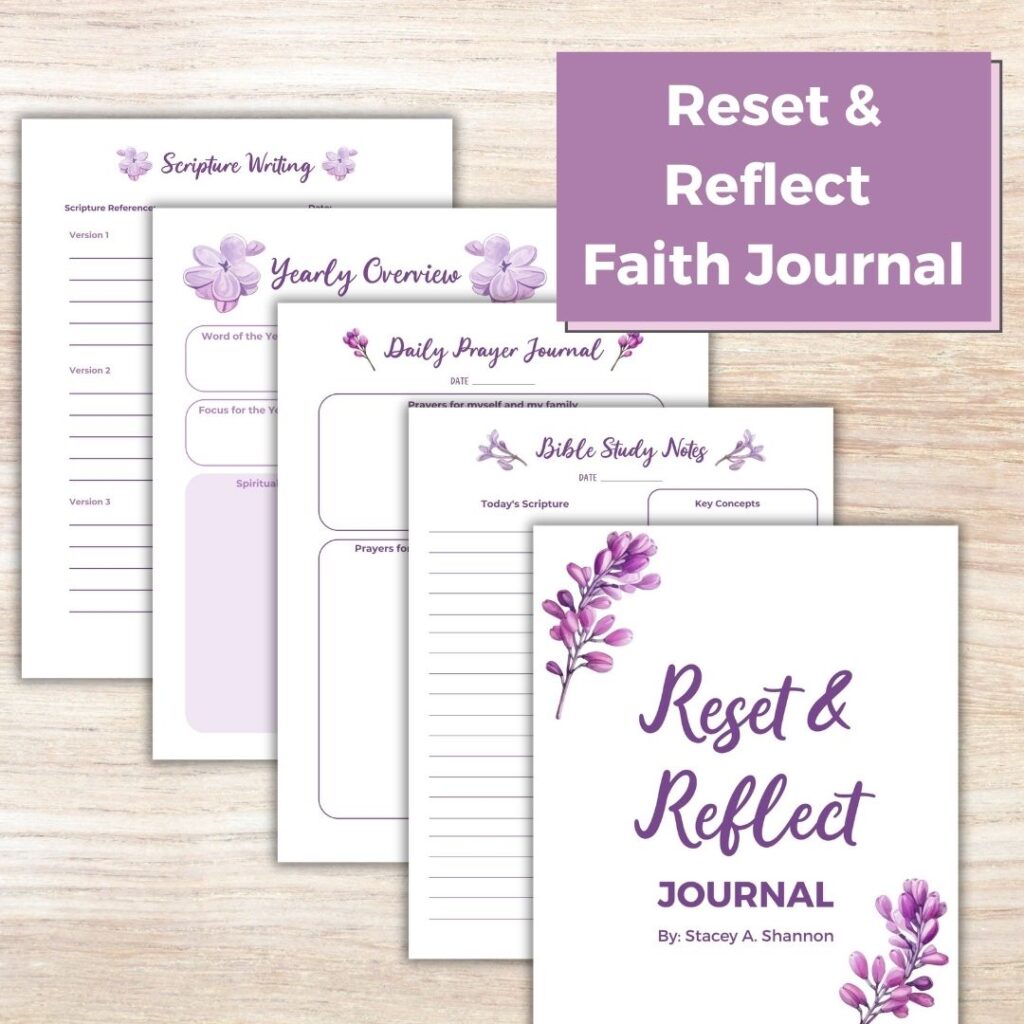
Maybe it’s simply showing up consistently in prayer, believing that your faithful God honors every step you take toward Him.

2 Corinthians 5:17 reminds us that in Christ, we are a new creation. The former things have passed away.

This doesn’t mean we forget our past, but we don’t let it define our future. We can recommit to growth knowing God’s mercies are new every morning.

Don’t look back with shame, dear mama. Look forward with hope, knowing the King of Kings has good plans for your life and your family.

A reset rooted in grace

If you’ve been feeling spiritually off, I want you to know this: you’re not too far gone, too distracted or too behind. God is ready and waiting to meet you right in the middle of your mess.

His love for you isn’t based on your performance; it’s based on His character.

There’s no fancy formula required. No “great reset” you need to pull off perfectly.

Just the simple act of turning your heart back to Him and trusting He will do the good work of transformation in His perfect timing.

Whether you’re dealing with major change in your life, processing difficult world events or simply feeling disconnected from your faith, remember God’s grace is sufficient.

He understands the challenges of being a mother in today’s world, and He sees your sincere desire to grow closer to Him.

This isn’t about comparing yourself to staff members at church or feeling like you need to measure up to some impossible standard.

This is about you and God, walking together in relationship as you experience His unfailing love in a fresh way.

Let this be your gentle invitation to start again. Whether that’s through daily Scripture reading, small prayers throughout your day or simply creating moments of stillness, know this: God honors every step you take toward Him.

Each prayer whispered, each verse read, each moment of gratitude offered, it all matters to your Heavenly Father.

Your next steps

If you’re ready to dig deeper into this journey of spiritual renewal, I’ve created a free 31-day Bible reading plan called Reset: A Spiritual Refresh for Moms. It’s designed to help you walk through these themes one day at a time, with no pressure, just grace.

This isn’t about perfection; it’s about progress. It’s about finding God in the midst of your real life and discovering that He’s been there all along, waiting with open arms and a heart full of love for you.

You don’t have to wait until the new year or until you have more time. You can start right now, right where you are. God is in the business of new beginnings, and today can be yours.

Let’s reset together, mama. Your weary heart deserves this gift of grace, and your family will benefit from the renewed woman of faith you’ll become as you draw closer to the heart of God.

Remember: you are loved, you are seen and you are not alone in this journey. The same God who created the entire world cares about the details of your daily life.

That’s the kind of personal, loving Father we serve—and that’s the foundation for every spiritual reset we’ll ever need.

Ready to begin your spiritual reset journey? Download the free 31-day Bible reading plan, “Reset: A Spiritual Refresh” with a daily challenge calendar and take the first step toward renewed faith today.

Reset: A Spiritual Refresh free Bible reading plan

Take it a step further with the “Reset and Reflect Journal” to help you grow closer to God in just a few minutes a day.

"Reset and Reflect Journal"

Bible verses about rest for busy moms: Finding peace in God’s presence

How to embrace God’s gift of rest without guilt, even in the midst of motherhood’s demands

“Come to me, all you who are weary and burdened, and I will give you rest.”

Matthew 11:28 (NIV)

Let me guess. You’re reading this while folding laundry, waiting in the school pickup line or stealing a quiet moment after everyone’s finally asleep.

I see you, mama. You’re tired. You’re carrying heavy burdens. I am you!

And somewhere deep down, you’re probably wondering if true rest is even possible in this season of motherhood.

The good news? God’s invitation to rest isn’t just for women without children or those in easier seasons of life. It’s for you, right here, right now — even in the beautiful chaos of raising little ones and managing busy lives.

God’s heart for rest: more than just a good idea

“By the seventh day God had finished the work he had been doing; so on the seventh day he rested from all his work. Then God blessed the seventh day and made it holy, because on it he rested from all the work of creating that he had done.”

Genesis 2:2-3 (NIV)

When we look at Bible verses about rest, we quickly discover rest isn’t just a nice suggestion from God; it’s woven into the very fabric of how He created us to live. From the very beginning, God established a rhythm of work and rest.

Notice that God didn’t rest because He was tired. He rested to establish a pattern for us. The Sabbath Day was always meant to be a gift, not a burden. 

Even before sin entered the world, God knew we would need regular rhythms of rest to thrive.

We need to get past the idea that rest is just for our own pleasure. The truth is, I’m a better mom when I am rested — physically, mentally, emotionally and spiritually.

Bible verses about rest for busy moms Pinterest image 4

But sometimes, I struggle with the importance of rest. I love a to-do list. Checking off tasks makes me happy.

Add in the pressures and responsibilities of motherhood, marriage and working for myself and the concept of rest gets thrown out the window.

Usually during these times, I’m cranky. I get grumpy with my children and my husband — the very people I want to love most and treat the best.

My husband will often gently call me on this and encourage me to find a quiet place to just be still and rejuvenate my soul. 

Sometimes it means he takes over kid duty completely (especially when they were little). Sometimes he just tells the kids I’m taking down time and leaves me in my bedroom with my book for an hour.

I always emerge from this resting place refilled and happier. Having a full day of rest is hard, yet smaller moments can make such a big difference.

Jesus’ invitation: Rest for weary souls

One of the most comforting Bible verses about rest comes directly from Jesus Himself:

“‘Come to me, all you who are weary and burdened, and I will give you rest. Take my yoke upon you and learn from me, for I am gentle and lowly in heart, and you will find rest for your souls. For my yoke is easy and my burden is light.'”

Matthew 11:28-30 (NIV)

We moms know what carrying heavy burdens feels like. The mental load of remembering everyone’s schedules, the emotional weight of your children’s struggles, the physical exhaustion of caring for everyone else’s needs — it’s overwhelming.

But Jesus offers something different: ultimate rest. He doesn’t just offer physical rest (though that’s important, too).

He offers rest for your soul. This is the kind of deep, spiritual rest that comes from knowing you don’t have to carry everything alone.

The peace of God that Jesus offers isn’t dependent on having a perfect schedule or getting eight hours of restful sleep. 

It’s available right in the middle of the mess, in the quiet moments when you remember that He is carrying you.

Resting in God’s presence: Finding quiet in the chaos

“The Lord is my shepherd, I lack nothing. He makes me lie down in green pastures, he leads me beside quiet waters, he refreshes my soul. He guides me along the right paths for his name’s sake.”

Psalm 23:1-3 (NIV)

King David, the author of these words, understood what it meant to find rest in God’s presence, even in difficult circumstances.

Notice the imagery here—green pastures and quiet waters. But here’s what I’ve learned: God can create those green pastures and quiet waters in your heart even when your house is loud and your day is full.

The truth is, I’ve found Sabbath rest in the quiet waters of the shower when I have a few moments to really connect with God. I’ve gotten true peace while driving to school pickup and singing along to praise music.

Sometimes resting in God’s presence looks like:

  • Whispering a prayer while you’re washing dishes
  • Taking three deep breaths and remembering He is with you during a toddler meltdown
  • Reading one verse on your phone while your coffee gets cold (again)
  • Choosing to see His provision in the small moments throughout your day

“This is what the Sovereign Lord, the Holy One of Israel, says: ‘In repentance and rest is your salvation, in quietness and trust is your strength.'”

Isaiah 30:15 (NIV)

Our strength doesn’t come from doing more or trying harder. It comes from turning to God and trusting Him with our busy lives.

Rest from worry and fear: Casting your anxieties

One of the biggest barriers to rest for lots of us mamas is anxiety. We worry about our children’s safety, their future, whether we’re doing enough, whether we’re messing them up. 

But God’s Word has so much to say about finding rest from these anxious thoughts, like the following Bible verses:

“Cast all your anxiety on him because he cares for you.”

1 Peter 5:7 (NIV)

“Do not be anxious about anything, but in every situation, by prayer and petition, with thanksgiving, present your requests to God. And the peace of God, which transcends all understanding, will guard your hearts and your minds in Christ Jesus.”

Philippians 4:6-7 (NIV)

The peace of God isn’t something we have to manufacture or work up. It’s a gift that comes when we choose to bring our worries to Him instead of carrying them alone. 

When your mind spirals with “what-ifs” about your children or your family, these Bible verses about rest can anchor your thoughts in truth.

A few years ago, I was spiraling out of control in my mind over my house. It sounds silly in the midst of all of life’s storms, but we were trying to sell our house and one thing after another stopped us.

I knew it was God’s will, and I trusted our Lord God had a better and different plan. Yet, my mind couldn’t stop seeing all the shortcomings in my home.

I was no longer content in a place where I spent the vast majority of my time. When my own ways of managing this anxiety didn’t work, I felt the Holy Spirit prompt me to thank God for this.

So I started saying a short prayer of thanks to God for keeping us where we needed to be every time my anxiety reared its head. At first, I was kind of resentful with my thanks, but it wasn’t long until I was sincere.

​When we are thankful, our soul finds peace in God and anxiety has to flee.

Perfect peace comes not from having everything under control, but from keeping our minds focused on Him:

“You will keep in perfect peace those whose minds are steadfast, because they trust in you.”

Isaiah 26:3 (NIV)

Resting from striving and perfectionism

We also need rest from always striving. As moms, we struggle with feeling like we need to do it all perfectly. Social media doesn’t help—it’s easy to compare our messy reality with everyone else’s highlight reel. 

But God calls us to rest from striving and perfectionism.

“For it is by grace you have been saved, through faith—and this is not from yourselves, it is the gift of God—not by works, so that no one can boast.”

Ephesians 2:8-9 (NIV)

This verse isn’t just about salvation—it’s about how we live every day. We don’t have to earn God’s love through perfect parenting or flawless housekeeping. His love for us isn’t based on our performance.

“Unless the Lord builds the house, the builders labor in vain.”

Psalm 127:1a (NIV)

Sometimes the most spiritual thing we can do is acknowledge our limitations and rest in God’s strength instead of our own. When we try to “do it all,” we often rob ourselves of the peace God wants to give us.

A few weeks ago, I was in the middle of an unrested, overworked, striving-for-perfection moment. I got passive aggressive about having to do everything around my house.

My daughter piped up and reminded me that if I needed help, then I just needed to ask for it.

It seems simple, but so often we try to take everything on our shoulders, which we were never meant to do. Asking for help from your immediate family, friends, extended family or even someone you pay for services is OK. It doesn’t make you a failure.

In fact, it means you’re honoring God’s plan for your life and recognizing your God-given need for rest.

God’s strength in our weakness

One of my favorite Bible verses about rest speaks directly to those moments when we feel completely depleted:

“He gives strength to the weary and increases the power of the weak. Even youths grow tired and weary, and young men stumble and fall; but those who hope in the Lord will renew their strength. They will soar on wings like eagles; they will run and not grow weary, they will walk and not be faint.”

Isaiah 40:29-31 (NIV)

The Creator of the ends of the earth—the everlasting God who never grows tired—promises to give His strength to weary souls like us.

You don’t have to wait until you feel strong to serve your family well. God’s power is made perfect in our weakness.

“But he said to me, ‘My grace is sufficient for you, for my power is made perfect in weakness.’ Therefore I will boast all the more gladly about my weaknesses, so that Christ’s power may rest on me.”

2 Corinthians 12:9 (NIV)

In spite of what hustle culture and social media tell us about going nonstop, we must learn the value of rest as God created it for us. Lay your burdens down with Him, and give yourself grace when you cannot do all the things. You were never meant to!

Living a lifestyle of rest: Practical steps

So how do we actually live this out in the middle of busy lives? How do we move from reading about rest to actually experiencing it?

Here are some practical ways to embrace God’s invitation to rest:

Redefine what rest looks like right now

Rest in this season of motherhood might not look like a whole day with your feet up reading a book. Sometimes rest looks like ordering pizza for dinner and watching a movie with your family. 

Sometimes it’s locking yourself in the bathroom for five minutes to pray and regroup. (Been there, done that on both fronts!)

Think about what brings you life and peace in small doses. Maybe it’s painting your nails after the kids are in bed, sitting on your front porch watching the sunset or listening to worship music while you cook dinner.

Find small pockets of rest throughout your day

Most of us can’t manage an entire Sabbath of solemn rest, but we can find small moments throughout our day. Look for those quiet moments.

Maybe while you’re waiting in the car, during naptime (if your kids still nap!) or in those few minutes before everyone else wakes up.

I’ve learned that being intentional about what I do during these small pockets of time makes a huge difference. Instead of mindlessly scrolling social media, I might read a devotional, listen to a worship song, read a book or simply sit quietly and reflect.

Bible verses about rest for busy moms Pinterest image 10

Create boundaries that protect your rest

Jesus himself set boundaries. He often withdrew from the crowds to pray and rest. Setting limits isn’t selfish — it’s necessary for sustainable ministry to our families.

This might mean saying no to good opportunities that would overwhelm your schedule or setting realistic expectations for what you can accomplish in a day. Remember, you can’t pour from an empty cup.

We’ve set different boundaries at different stages of our children’s lives to protect their rest and ours. For example, in elementary school, each was only allowed to do one recurring extracurricular activity at a time. 

Now they are older as a tween and teen, so they have a few more activities. But ours has intentionally never been a family who is constantly go-go-going everywhere.

Embrace the tried-and-true

“This is what the Lord says: ‘Stand at the crossroads and look; ask for the ancient paths, ask where the good way is, and walk in it, and you will find rest for your souls.'”

Jeremiah 6:16a (NIV)

Sometimes finding rest means getting back to basics of the tried-and-true paths God’s people have walked for generations. Regular prayer, reading God’s Word, keeping Sabbath rhythms (even if imperfectly) and gathering with other believers aren’t just religious activities—they’re pathways to the soul rest Jesus promised.

So many times I’ve been restored just by maintaining these habits to help me connect with God and find a place of rest for even a few minutes.

Rest as an act of faith

Choosing to rest — especially when there’s always more to do — is actually an act of faith.

It’s saying, “I trust that God is big enough to handle what I can’t get done today.” It’s acknowledging that the world doesn’t depend on our constant productivity.

“In vain you rise early and stay up late, toiling for food to eat—for he grants sleep to those he loves.”

Psalm 127:2 (NIV)

God wants to grant you beloved sleep and soul rest, not because you’ve earned it, but because He loves you. Rest isn’t a reward.

A gentle reminder: You’re not failing

If you’re reading this and feeling guilty about how little rest you actually get or how hard it is to find quiet moments with God, please hear this: you’re not failing.

Motherhood is hard. Some seasons are harder than others. 

God sees your heart, your desire to know Him better and your love for your family.

Start small. Choose one Bible verse about rest to meditate on this week. Look for one small pocket of time to connect with God. Ask Him to help you see opportunities for rest that you might be missing.

Remember, the Lord of peace Himself wants to give you peace at all times and in every way. This isn’t about adding another item to your to-do list. It’s about receiving the gift of rest that God offers.

“Now may the Lord of peace himself give you peace at all times and in every way. The Lord be with all of you.”

2 Thessalonians 3:16 (NIV)

Your next step: A month of rest

If this resonates with your heart and you’d like some guidance in making rest a more regular part of your routine, I’ve created a free reading plan focused on finding rest in God.

It includes Bible verses and reflection questions designed specifically for busy moms who need encouragement to slow down and receive God’s gift of rest.

Each week focuses on a different aspect of rest—from receiving God’s invitation to rest, to learning to abide in His presence, to letting go of worry and striving.

You can access it here.

Free Bible reading plan about rest in God

Final thoughts: Rest is holy

Let me leave you with this truth: rest is holy, and you are invited. Not because you’ve earned it, but because you are deeply loved by the Creator of the ends of the earth who never grows weary.

In your busy life, in the middle of all the beautiful chaos of motherhood, God is calling you to come away with Him — even just for a few minutes. He wants to restore your soul, give you His perfect peace and remind you that you don’t have to carry it all alone.

So take a deep breath, mama. Let go of the guilt about that undone laundry or the imperfect dinner plan. God’s rest is available to you right here, right now. You just need to receive it.

Families With Grace
Privacy Overview

This website uses cookies so that we can provide you with the best user experience possible. Cookie information is stored in your browser and performs functions such as recognising you when you return to our website and helping our team to understand which sections of the website you find most interesting and useful.